
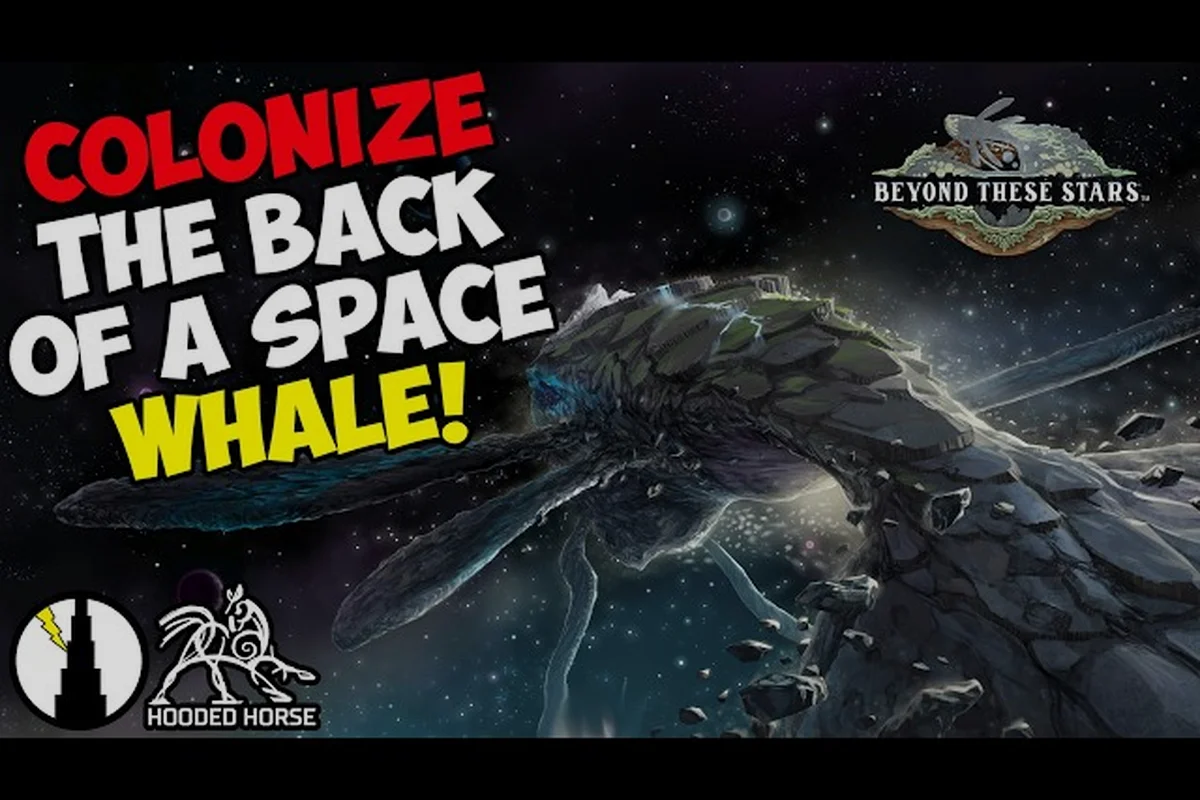
A strong seed can turn a confusing first hour of Beyond These Stars into a smooth landing on Kewa's back, and knowing which nodes to scout first decides whether your colony starts with a stable water cycle or chases shortages across the stars. The world seed influences the layout of every system, planet, and point of interest your Scout Ship can investigate, so the choices you make in the opening hours echo through your entire run. This Beyond These Stars seed guide walks through how seeds work, what to scout first, and how those exploration rewards tie into the deeper lore about Kewa, the Peeps, and the galaxy at large.
How World Seeds Shape Your Beyond These Stars Run
A world seed in Beyond These Stars is the hidden blueprint that determines the configuration of your galaxy: which planets appear on the map, where space junk drifts, which node hides a trade station, and which barren rock holds a strange object worth investigating. Because the developer released the title straight to 1.0 on 16 October 2026, community wiki data does not exist yet, and every observation below is anchored to the official store page, the the settleable planets dev blog, and the developer's Dev Blog series.
When you start a new session, the game rolls a seed for the procedural galaxy and then progressively reveals nodes on the Galaxy Map. According to Dev Blog #28, the map is partially visible at first and unlocks over time, with nodes holding barren planets, space junk, strange objects, trade stations, and aliens. That layered reveal means the seed matters twice: once for what exists, and once for the order in which you encounter it. Two players using the same seed will see the same map; two players on different seeds will see overlapping archetypes but different placements, climates, and resource mixes.
What the Seed Actually Controls
The seed is not a difficulty setting. It does not change the rules of the game, the cost of a Home Spaceship, or the behavior of strikes and celebrations. It controls layout and loot, not fairness. Below is a summary of what is and is not seed-driven, based on the official Beginner Guide and the Dev Blog series.
| Element | Seed-Influenced? | Source |
|---|---|---|
| Planet placement on Galaxy Map | Yes | Dev Blog #28 |
| Climate tags (hot, cold, moderate) on each planet | Yes | Dev Blog #29 (temperature system) |
| Resource nodes per planet (Cotton seeds, Shell deposits, sheep pastures) | Yes | Pasture, Trawler building descriptions |
| Order nodes unlock on the map | Partially (reveal logic on top of seed) | Dev Blog #28 |
| Kewa's starting happiness and health | No (constant per run start) | Core setting, Dev Blog #29 |
| Building costs and research unlocks | No | Official Beginner Guide |
| Peep behavior, shift rules, sickness curve | No | Dev Blogs #22, #23, #25 |
A common misconception is that a "good seed" means an easy seed. The reality is closer to a seed that matches the colony strategy you want to run. A seed with multiple temperate planets lets you chain Pastures and Kitchens early, while a seed heavy in barren rocks pushes you toward Outposts and Space Ports sooner. The seed is a starting handshake, not a difficulty slider.
Why Seed Literacy Matters From the First Hour
Because the Scout Ship is the earliest way to discover what's out there, your first scouting decisions shape your economy. Dev Blog #28 frames the Galaxy Map as a partially obscured puzzle that you reveal through the Scout Ship and José, the character aboard it. If you burn your first scouts on barren planets far from your current supply lines, you delay the moment you find a planet that hosts chickens, cows, or a moderate-climate zone like the Neutral Sector. The seed is constant, but the path you take through it is yours, and that path compounds.
What to Scout First in Beyond These Stars
The Scout Ship can reach any visible node, but the time cost of sending it across the map is real. Players who learn to prioritize early nodes get a smoother midgame because they learn what their home seed actually offers. This section of the Beyond These Stars seed guide turns that lesson into a concrete scouting priority list.
The First Three Scouting Trips
José's early scouting routes are short, so every trip should answer a specific question rather than wander aimlessly. Treat each Scout Ship launch as a deliberate investment: identify which resource gap (food, clothing, or trade access) is most dangerous to your seed's Kewa colony, then match the destination to that gap before sending ships into the wider galaxy.
| Priority | Target Type | Why It Matters | Risk If Skipped |
|---|---|---|---|
| 1 | Nearby temperate planet with a moderate climate | Sources of chickens, cows, and steady plant growth | Reliance on Kewa-only production in a hostile climate |
| 2 | A planet tagged with Shell, Cotton seeds, or sheep | Unlocks Pasture, Weaver, and Tailor chains | Late-game clothing shortages and cold-weather deaths |
| 3 | A node that reveals a trade station | Lets you offload surplus and import missing resources | Slower recovery from shortages and early strikes |
The first scouting trip is almost always the closest temperate planet. Dev Blog #29 describes a hot galaxy as a stressor that drags Kewa's happiness down, and a cold galaxy that does the same in the other direction. Sending your Scout Ship to a moderate-climate planet first, especially one in the Neutral Sector that Dev Blog #28 calls out by name, stabilizes the temperature axis early and gives you a backup home for sensitive resources.
Mid-Run Scouting Priorities
Once your Scout Ship has unlocked the first ring of nodes, the priorities shift from "what is out there" to "what do I still need." This is where the seed starts to feel like a budget, because every scouting trip is an opportunity cost against building, terraforming, and research.
-
Strange objects before space junk. Strange objects often feed into the lore fragments discussed in the lore section below, and they are finite per seed. Space junk, by contrast, is a steady source of salvage that does not require the Scout Ship.
-
Alien nodes after you can build a Landing Pad. The developer describes Ublo as an "infamous" and "cheeky" alien in Dev Blog #26, and alien encounters can reshape your run. Without a Landing Pad, your ships cannot actually land on Kewa's new neighbors, so scouting an alien node before you have a Pad is wasted time.
-
Barren planets only after the productive ones are claimed. Barren planets are great for Outposts and terraforming projects, but they do not deliver immediate value. Mark them and return later, once you have surplus Peeps and chemicals to spare.
If you want a deeper map of how the Galaxy Map reveals itself, the Beyond These Stars galaxy map overview breaks down the unlock sequence node by node — including which Scout Ship upgrades gate each ring, how Kewa's home system branches before later ones, and where the lore-tied anomalies tend to spawn so you can plan a mid-run route instead of stumbling into them after your Landing Pad is already built.
Beyond These Stars Exploration Tips by Climate
Climate is the most visible seed-driven variable, and it is the one that punishes the hardest if you ignore it. Dev Blog #29 spells out the temperature system plainly: a hot galaxy drags Kewa's happiness down, and if happiness falls far enough, Kewa starts emergency travel toward somewhere cold. Your exploration order should respect that.
Hot Galaxy Playbook
In a hot galaxy, your first move is to find a cold-or-moderate planet fast. A Peep's Cold Weather Clothing is built at the Tailor from fabrics produced by the Weaver, which in turn needs Wool from a planet with sheep or Cotton seeds from another node. If your seed is light on those nodes near your home planet, send the Scout Ship on a long route to find a single cold planet with a Pasture, because that one node is the difference between a stable colony and a slow sickness spiral.
You will also lean harder on Tree Nurseries and rivers. Planting trees and creating rivers are the indirect ways to address Pollution that Dev Blog #29 highlights, and both are stronger in a hot climate because evaporation and biome stress are higher. The Beyond These Stars exploration tips you learn in a hot galaxy transfer to other climates, but the urgency does not.
Cold Galaxy Playbook
A cold galaxy inverts the problem. Your first scout should chase a planet with steady plant growth, because Cold Weather Clothing is the early-game survival requirement and you will burn through Wool and Cotton quickly. A common mistake is to assume that a cold planet gives you "free" warmth. It does not, because Clothing has to be made, and the production chain takes shifts. Scout early, build a Tailor early, and stockpile fabrics before the second cold snap.
Mixed and Moderate Galaxies
Mixed seeds are the friendliest starting conditions, and the Neutral Sector's moderate-climate planet with chickens and cows is the clearest example. In these seeds, you have breathing room to chase lore nodes, build Outposts, and run terraforming experiments without losing Kewa's happiness in a single bad shift. The trap is complacency, because mixed seeds still punish players who ignore the temperature system entirely. Keep at least one scout running toward a hot and a cold planet so you can always relocate if Kewa's mood swings.
Lore Guide: How Exploration Ties to the Story of Kewa and the Peeps
Exploration is not just a resource hunt. Each scout trip also uncovers fragments of why the Peeps are on Kewa's back, what happened to the ancestors, and what Ublo and the other aliens want. This Beyond These Stars lore guide section shows how to read those fragments and where they cluster on the map.
Lore Arches You Can Find on the Map
The game does not hand you a lore menu. Instead, it sprinkles clues through strange objects, alien nodes, and the things Kewa says in dialogue. The choices you make when talking to Kewa nudge happiness up or down, but they also reveal which way the story is leaning.
| Arch | Where It Surfaces | What It Reveals |
|---|---|---|
| Ancestors | Strange objects on old planets | Hints at the civilization that traveled before the current Peeps |
| Kewa's migration | Kewa's own dialogue, hot/cold galaxy shifts | The Space Whale's motivations and the emergency travel rule |
| Alien contact | Alien nodes, especially around Ublo | The wider galactic politics and trading networks |
| Outpost history | Barren planets with prior structures | Why previous Peep expeditions failed or succeeded |
The Beyond These Stars lore guide angle matters because strange-object nodes are finite per seed. Once a strange object has been picked up, the seed has fewer of them. If you want a full picture, scout strange objects before space junk in the early game, and revisit any unexplored system after you have built a Settlement Ship or Outpost.
Connecting Exploration Rewards to the Deeper Story
Every resource you find ties back to the lore in a small way. Cotton seeds on a forgotten planet hint that the ancestors farmed. A trade station implies that the current Peeps are not the first traders. An alien node with Ublo suggests contact has happened before. None of this is forced on you, but players who read those signals get a richer picture of why the Peeps are wandering the stars and what Kewa is trying to teach them.
A practical way to track this is to keep a small note on each planet you visit. Mark what you found, what you brought back, and what question the find raised. The seed will not change, so the map you build in your notebook becomes a personal lore codex that no other player will have in the same shape. That is part of what makes the seed feel meaningful rather than random.
Reading Your Seed: Practical Workflow for the First Three Shifts
A consistent workflow turns seed knowledge into a faster, calmer start. Below is a three-shift routine that works for almost every seed, with a short table of goals for each shift. Adapt it as you learn what your specific galaxy looks like.
Shift One: Establish the Core
Your first shift should end with the Scout Ship assigned to a nearby temperate planet, the Home Spaceship producing, and at least one Pasture or Kitchen underway if the climate allows. Sickness is most likely to spike at the start of a shift when Peep energy is low, per Dev Blog #25, so build toward food and rest stability before you push for exploration.
Shift Two: Lock the Temperature Axis
By the end of shift two, you should know whether you are in a hot, cold, or mixed galaxy, and you should have at least one scout en route to a planet that can balance that. If you are in a hot galaxy, that scout is hunting for a cold planet. If you are in a cold galaxy, the scout is hunting for plant-rich ground. Mixed seeds get the luxury of a lore-focused scout trip instead.
Shift Three: Expand the Map
Shift three is when you start to feel the seed's full shape. Open the Galaxy Map, identify the three nodes that look most rewarding, and queue the Scout Ship. At the same time, start research toward Advanced Goods and plan a Landing Pad so that future alien encounters can actually land. The Landing Pad requirement is the kind of detail that gets overlooked, but the official Beginner Guide is explicit: a Space Ship cannot land on Kewa without one.
| Shift | Scouting Goal | Building Goal | Research Goal |
|---|---|---|---|
| 1 | Closest temperate planet | Home Spaceship production, first Pasture or Kitchen | Unlock Advanced Goods (foundation) |
| 2 | Climate-balancing planet | Tree Nursery or Cleaner (Pollution control) | Tech toward Landing Pad |
| 3 | Strange object or alien node | Landing Pad started | Tech toward Outposts |
If you are unsure how Outposts and the Settlement Ship fit into this rhythm, the Beyond These Stars maps and sectors overview walks through how to read the map as your settlement grows. The key is to treat each new sector you reveal as a layered checklist: first confirm the planet's climate type matches a building you still need (Pasture, Kitchen, or Tree Nursery), then check whether the node is close enough to your home base for a Settlement Ship round trip without burning through fuel reserves, and only then commit your Outpost slot to that Strange Object or alien beacon.
Frequently Asked Questions
What is a world seed in Beyond These Stars?
A world seed is the value the game uses to generate the layout of your galaxy, including where planets, space junk, strange objects, trade stations, and alien nodes appear on the Galaxy Map. It also decides which planets carry resources like Cotton seeds, Shell, or sheep pastures, and which climate tags each planet receives. Two players using the same seed will see the same map; players on different seeds will see overlapping archetypes but different placements and climates.
What should I scout first with the Scout Ship?
The first scouting trip should almost always target the closest temperate planet with a moderate climate, because that node stabilizes the temperature axis and gives you a backup home for chickens, cows, and plant growth. After that, prioritize a planet that unlocks Pasture, Weaver, and Tailor chains, then a trade station. Strange objects and alien nodes come later, once you can actually land on Kewa's neighbors with a Landing Pad.
Does the seed affect Kewa's happiness or the difficulty?
No. The seed controls layout and loot, not Kewa's starting happiness, building costs, or Peep behavior. Difficulty comes from how the seed's climate and node placement interact with your choices. A hot galaxy is harder not because the seed changes Kewa, but because the seed places you in a region where Kewa's happiness drops faster and may trigger emergency travel.
How do exploration rewards connect to the lore?
Strange objects, alien nodes, and the remains of old Outposts each carry fragments of the deeper story about the ancestors, Kewa's migration, and alien contact. Because strange objects are finite per seed, scouting them early gives you a more complete picture before the map runs out of clues. Players who read those signals get a richer sense of why the Peeps are on Kewa's back and what the wider galaxy knows about them.
Can I replay a seed I liked?
Yes. The seed is set when you start a run, and the game will regenerate the same map if you reuse it. There is no official seed-sharing tool yet because the game is only one day past launch as of 17 October 2026, so the community has not built one. Until then, keep a personal note of any seed that produced a run you enjoyed, and reuse it when you want a familiar galaxy.