
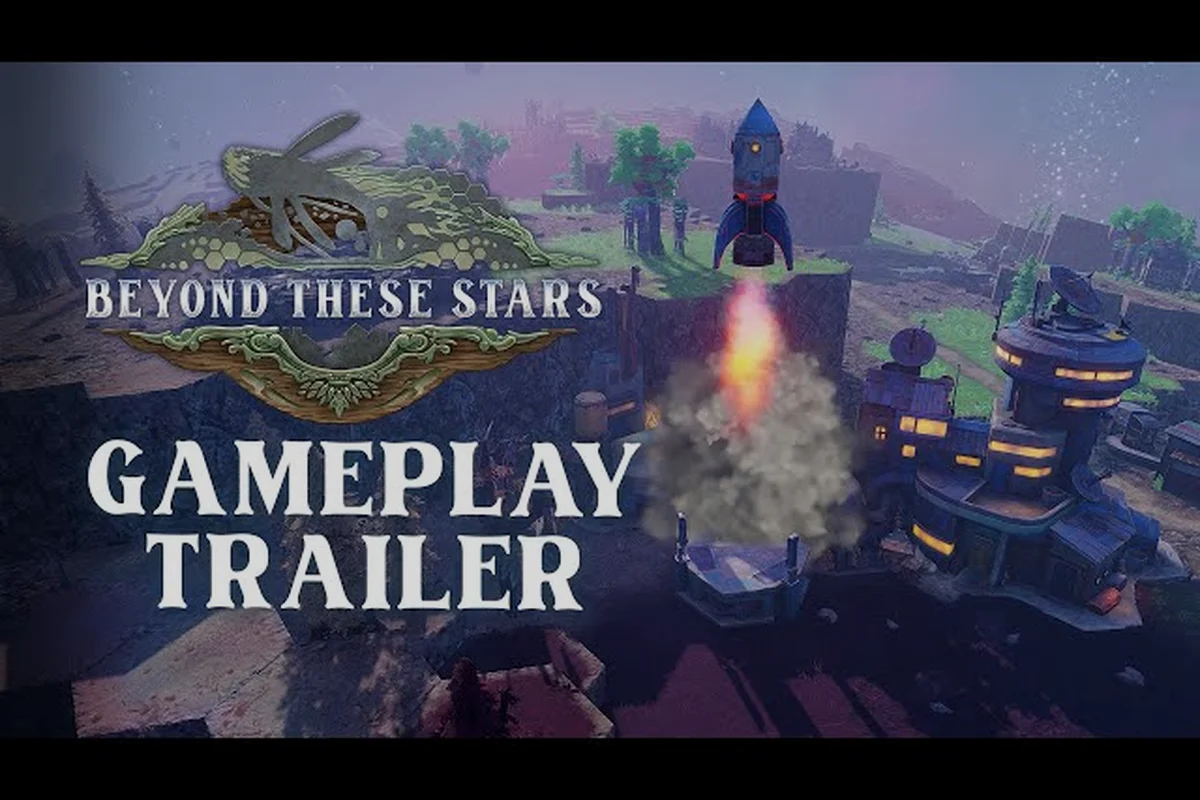
Players picking up Beyond These Stars often want to know how big is the galaxy they will be charting, and the short answer is that Balancing Monkey Games has not published a fixed count of star systems or settleable planets, so the actual reach of any given run depends on a few in-game choices rather than a single developer-quoted figure. The Galaxy Map and its nested Solar System View determine how far the colony can travel from atop Kewa, while elements such as Outposts, the Settlement Ship, and the Home Spaceship set the practical limit on how many bodies a playthrough can reach. As a result, the perceived size of the galaxy is shaped less by a published number and more by the route a player plots through the Neutral Sector and Resource Deposits over the course of a save.
Mapping the Galaxy Beyond Kewa's Back
Beyond These Stars drops players onto a sentient Space Whale named Kewa and asks a deceptively simple question: how big is the galaxy you're actually crossing? Because the game launched on 2026-10-16 with no Early Access phase, the developer has not published a fixed total of star systems, settleable planets, or hours of content. The galaxy reveals itself node by node on the Galaxy Map, partially visible from the start and unlocking as Kewa travels, which means the player's own experience of its scale depends on how far they push the journey, how many planets they settle via the Settlement Ship, and whether they restart for a different outcome.
This guide breaks down what is actually known about the galaxy's scope as of the October 2026 launch: the structure of the Galaxy Map, the role of Outposts on nearby planets, the type of planet you can settle versus the type you can only visit, and the honest unknowns the studio has left intentionally undocumented. It also covers how multiple playthroughs reshape the answer, and where the small handful of confirmed easter eggs and hidden content sit inside a galaxy that is still being explored one node at a time.
Galaxy Map Structure and Travel Scope
The Galaxy Map is the player's window into the wider cosmos, and per the developer's Dev Blog #28, it is intentionally partially visible at the start and unlocks over time as Kewa moves through space. Each node on the map can hold one or more of the following: barren planets, space junk, strange objects, trade stations, and aliens. The map is not a checklist of locations with hard caps; it is a procedural-feeling layer that the studio has framed as something you chip away at, not something you finish in a single session.
Travel itself follows a layered progression. You begin on Kewa with the Solar System View, which unlocks right after your first conversation with the whale. The Scout Ship is your early vessel, and you investigate map nodes on it alongside the character Jose, who is officially listed as a member of the Scout Ship's crew in the press kit. As you progress, the Space Port becomes your orbital hub; up to four Landing Pads can attach to a single Space Port, with each pad taking one ship at a time, and ships shuttle between Space Ports. The Settlement Ship is the vessel that actually lands on a new planet to found a colony, and the developer has been explicit that the player does not build it.
What Each Galaxy Map Node Can Hold
| Node Feature | Type | Player Action |
|---|---|---|
| Barren planet | Settleable via Settlement Ship | Launch colony, terraform, build |
| Space junk | Investigate | Salvage materials, optional rewards |
| Strange objects | Investigate | Lore, curiosity events |
| Trade station | Travel to | Exchange resources, no permanent base |
| Aliens | Encounter | Ublo-style interactions, dialogue |
Confirmed Planets and Points of Interest
| Location | Source | Climate/Notes |
|---|---|---|
| Kewa (the Space Whale) | Official site, Dev Blog #29 | The game's ground; sentient, has health and happiness |
| Neutral Sector planet | Dev Blog #28 | Moderate climate; chickens and cows present |
| Outpost planets | Dev Blog #28 | Nearby planets that supplement what Kewa cannot supply |
| Settleable planets | Dev Blog #28 | Reached via Settlement Ship; the player does not build the ship |
The honest summary is that the developer has not published a fixed total. The galaxy is structured so that more nodes become visible the longer Kewa travels, and what counts as "big" depends entirely on how many planets the player decides to colonize rather than visit.
Settleable Planets Versus Visit-Only Nodes
Not every node on the Galaxy Map supports a permanent settlement. The Settlement Ship is reserved for planets the developer has flagged as colonizable, and landing on a barren planet with the ship begins a full colony loop: you build a base, terraform tiles, plant trees, manage Peeps and their shifts, and eventually either expand or move on. The player-built spacecraft that come from the Spaceship Builder are limited to the named ship types in the verified buildings list, and none of them replace the Settlement Ship.
Planets you cannot settle still matter. Trade stations are explicitly map-node features you travel to, not buildings you place, and the only player-built space structures are the Space Port, the Landing Pad, and the Spaceship Builder. Strange objects and space junk offer investigation moments that are part of the hidden content layer; they do not become permanent homes. The Neutral Sector, named directly in Dev Blog #28, holds a moderate-climate planet with chickens and cows, which is a useful benchmark for the kind of biome the developer considers friendly to a long-running settlement.
What Settling Actually Requires
The act of settling is gated by real prep work, not by a single button press. You need a functional Space Port with at least one operational Landing Pad before the Settlement Ship can depart in the first place, and the ship itself is issued by the story rather than constructed. Once it lands, you are responsible for terraforming, happiness, pollution control, and the Peep needs that drive the colony's survival. This is why "how many planets can I settle" is not a number the developer has published: the answer is partly determined by how many eligible nodes your seed of the Galaxy Map reveals, and partly by how much prep work you can sustain between Settlement Ship launches.
The Outposts on nearby planets are a softer middle ground. Per Dev Blog #28, they exist to supplement what Kewa cannot supply on her own back, which means a player who skips settling entirely can still interact with multiple planets through Outpost logistics without triggering a full colony arc on each one.
How Many Hours Does the Galaxy Take to Cross?
The developer has not published a fixed hour count for the main story or for 100% galaxy completion, which is a common gap for games that ship straight to 1.0 without an Early Access phase. What can be said with confidence is that the scope is comparable to the studio's previous title, Before We Leave, but layered with the additional complexity of the Galaxy Map, multiple settleable planets, and Kewa's own happiness and dialogue systems. Players who push for a single Story Mode run with a handful of settlements should expect a meaningful city-builder length, while players who chase every node on the Galaxy Map will push well past that baseline.
Because the game launched one day before this guide was written, third-party timer data does not yet exist, and the Steam Community guides hub holds very few player-written walkthroughs alongside the developer's own Official Beginner's Guide. Any hour figure circulating right now is anecdotal.
What Affects Total Playtime
| Factor | Effect on Hours |
|---|---|
| Number of planets settled | Each new colony adds terraforming, Peep management, and tech research hours |
| Galaxy Map exploration depth | More nodes investigated = more encounters, more travel, more hidden content |
| Strike and sickness management | Dev Blog #23 and #25 show these systems can extend a run if mishandled |
| Sandbox Mode | Dev Blog #27 lets you choose resources, water, terrain, planets — replayable indefinitely |
| Multiple playthroughs | Different seeds shift the Galaxy Map and eligible planets |
Story Mode Versus Sandbox Mode
The developer recommends playing Story Mode first, and Sandbox Mode is positioned as a separate experience where you choose which resources, water distribution, terrain, planets and more you want enabled. Sandbox is the natural place to experiment with galaxy-scale playthroughs because the developer lets you opt into conditions that would be punishing in Story Mode. For a player asking how many hours the game offers, the honest answer is that Story Mode is the finite leg, and Sandbox is effectively open-ended once you start chaining custom galaxies together.
Multiple Playthroughs and How the Galaxy Changes
The reason beyond these stars multiple playthroughs keeps coming up in community conversations is that the Galaxy Map's procedural feel means each seed reshuffles which nodes appear, which planets are flagged as settleable, and which strange objects and aliens you encounter. A player who settles three planets in their first run may find a completely different set of barren planets in their second, and the Neutral Sector's moderate-climate planet is the one explicitly named region the studio has anchored in the Galaxy Map.
Replay value also flows from the game's systems rather than from a single hard number. Shifts, strikes, celebrations, sickness and mourning, and Kewa's own dialogue choices all reward a second run where you already know which dialogue options nudge the whale's happiness in a hot or cold galaxy. Dev Blog #29 explicitly notes that a hot galaxy drags Kewa's happiness down and that, if it falls far enough, Kewa starts emergency travel somewhere cold. That kind of systemic interaction is the kind of thing that is much easier to manage on a second run.
Reasons to Start a New Game+
| Reason | What It Changes |
|---|---|
| Different Galaxy Map seed | New nodes, new settleable planets, new aliens |
| Story Mode versus Sandbox | Sandbox lets you tune water, terrain, and resources |
| Kewa happiness mastery | Hot/cold galaxy management is easier on a second run |
| Hidden content hunt | Easter eggs and strange objects vary by seed |
| Achievement hunting | 64 Steam achievements, many tied to exploration and colony milestones |
A player who finishes Story Mode and wants more content without a fresh start can also lean on Sandbox Mode for an indefinite number of custom galaxies rather than a strict "New Game+" loop.
Easter Eggs and Hidden Content in the Galaxy
Because the game launched on 2026-10-16, the layer of community-discovered easter eggs and hidden content is still thin, and the developer has not published an official list. What the studio has confirmed is that the Galaxy Map nodes can hold space junk, strange objects, aliens, and trade stations, all of which are explicitly framed as investigative rather than functional. Ublo, the alien the developer officially calls "infamous and cheeky" in Dev Blog #26, is the most clearly signposted hidden-content character because the press kit lists them alongside the named cast: Baz the Wanderer, Jose, Ublo, Matilda, Kieran, Jerry, N'Orva, and Lottie, with Tuki Laumea on voiceover.
There is no published catalogue of named planets, no catalogue of easter egg triggers, and no catalogue of secret buildings. The closest thing to a known set of hidden interactions lives in Kewa's dialogue system, where your choices nudge the whale's happiness, and in the strange objects that occasionally surface on the Galaxy Map. Players who want to surface these moments should treat the Scout Ship's investigation phase as a slow pass rather than a speed-run, because the developer has framed the Galaxy Map as something that reveals more the longer you stay in the system.
Where to Look First
| Layer | Where to Look |
|---|---|
| Named cast interactions | Press kit list, especially Ublo and Baz the Wanderer |
| Kewa dialogue | Any conversation with the whale can shift happiness outcomes |
| Strange objects | Galaxy Map nodes, investigated via the Scout Ship with Jose |
| Space junk | Salvage encounters, occasionally tied to lore |
| Trade stations | Visit-only, no permanent base, but often part of hidden content chains |
For a deeper look at the named cast and the voice actors behind them, the Dev Blog #28 on settleable planets is the authoritative source, and it also lists the engine and audio tools the studio used. Players who want the official beginner-level onboarding before they start chasing hidden content can read the Beyond These Stars Official Beginner's Guide on Steam.
The Honest Limits of a Day-One Galaxy Guide
The galaxy in Beyond These Stars is not a fixed-size box the developer has measured and stamped. It is a layered set of systems: a partially visible Galaxy Map that unlocks over time, settleable planets you reach via the Settlement Ship, Outposts on nearby worlds, the Neutral Sector as a named anchor, and the procedural-feeling node generation that reshuffles each seed. Because the studio chose to skip Early Access and ship straight to 1.0 on 2026-10-16, the only authoritative numbers are the ones tied to fixed facts: 64 Steam achievements, the S$29.99 launch price with a -20% discount, and the 15 supported languages. The community has had one day to surface hidden content and easter eggs, which is why the developer has not published a total planet count, a total playtime figure, or a list of secret triggers.
A new player asking beyond these stars how big is the galaxy should treat the answer as: as big as your chosen playthrough makes it. Settle a few planets and you will see a fraction of the map; chase every node and you will live inside the Galaxy Map for far longer than a single Story Mode run; layer in Sandbox Mode and the ceiling disappears. The same logic applies to how many planets there are, to how many hours the game offers, and to the hidden content layer that is still being discovered one node at a time.
If you want to keep mapping the galaxy as more of it becomes documented, the official Beyond These Stars website hosts every Dev Blog and developer diary, and the Launch Trailer on the developer's YouTube channel is the quickest way to see the scope of Kewa's journey before you start your own. The galaxy is the size of your willingness to keep asking the next node what it is hiding.
Frequently Asked Questions
How big is the galaxy in Beyond These Stars?
The developer has not published a fixed total of star systems or planets. The Galaxy Map is partially visible at the start and unlocks as Kewa travels, with nodes that can hold barren planets, space junk, strange objects, trade stations, and aliens. The galaxy's effective size is therefore a function of how many nodes your seed reveals and how many planets you choose to settle via the Settlement Ship.
How many planets can you settle in Beyond These Stars?
There is no published cap on settleable planets. The Settlement Ship is reserved for planets the developer has flagged as colonizable, and the player does not build it. Each new settlement adds terraforming, Peep management, and research hours, so practical limits are set by the player's time and prep rather than by a hard count.
How many hours does Beyond These Stars take to beat?
The studio has not published a fixed hour count. Story Mode is the finite leg of the game, while Sandbox Mode is positioned as open-ended once you start chaining custom galaxies together. With no third-party timer data yet available at the October 2026 launch, treat any specific hour figure as anecdotal until the community documents it.
Are multiple playthroughs worth it in Beyond These Stars?
Yes, because the Galaxy Map's procedural feel reshuffles nodes, settleable planets, and strange-object encounters between seeds. A second run also makes it easier to manage Kewa's happiness in hot or cold galaxies, since you already know which dialogue options shift the whale's mood.
Does Beyond These Stars have easter eggs and hidden content?
The developer has confirmed that Galaxy Map nodes can hold space junk, strange objects, aliens, and trade stations, all of which function as investigative hidden content. The alien Ublo is the most clearly signposted secret character, but no official catalogue of triggers exists yet because the game shipped one day before this guide was written.