
Kewa
How Kewa happiness and health actually move: biome upkeep, temperature and emergency travel, dialogue choices, and why the whale you live on decides how your story ends.
Introduction
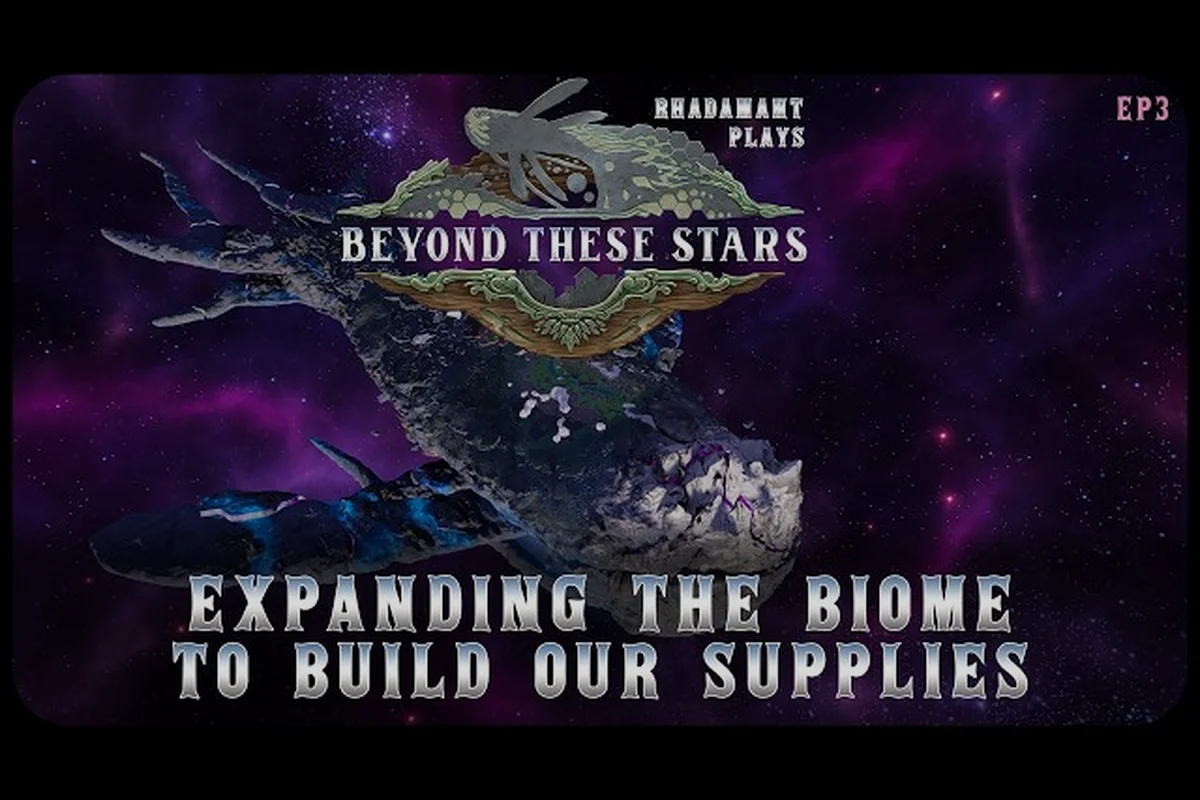
Kewa is the reason Beyond These Stars does not feel like other city builders. The ground your Peeps build on is a sentient Space Whale crossing the galaxy, and the creature has health and happiness of their own. Both numbers respond to things you control: the state of the biome on their back, how much pollution your industry pushes into it, how long you loiter in a hot galaxy, and even the tone of the dialogue choices you pick when Kewa talks to you. The consequences run the other way too. An unhappy Kewa makes life harder for your settlements, and if their mood falls far enough they will make an emergency journey somewhere colder without asking, which can pull you out of a system while your outpost there is still half finished. The developers have said Kewa’s health can affect how the story progresses and concludes, which makes this the one relationship in the game worth managing as carefully as your production lines.
Kewa Happiness & Health Factors
| Signal | Direction | Effect on Kewa |
|---|---|---|
| Biome health on the plate | Up | Planting trees, cutting pollution and letting rivers run keeps the ecosystem that sustains Kewa in good condition |
| Pollution and toxic tiles | Down | Industrial output contaminates the ground Kewa is made of and drags both health and mood lower |
| Time spent in a hot galaxy | Down | Sitting too long in a warm system erodes happiness until Kewa travels somewhere colder on their own |
| Dialogue choices | Both | Harsh lines cost a little happiness, warm ones give a little back, so conversations are a lever you can pull |
| Requests Kewa makes | Up | Answering what the whale asks for is the most direct way to keep the relationship healthy |
| Over-exploiting the plate | Down | Stripping resources faster than the biome recovers shrinks the habitat you depend on |
Systems That Feed Back Into Kewa
Biome Health
Continuous upkeep
Temperature
Travel and timing
Conversations
Dialogue as a lever
Health And Story
Long-horizon stakes
Emergency Travel
Forced relocation
Pollution And Toxic Tiles
Ground contamination
Core Mechanics
Kewa’s wellbeing is not a single meter with a single fix; it is the sum of several pressures that move at different speeds. Biome health responds to what your industry leaves behind and what your terraforming adds, and it changes on the timescale of a district build. Temperature is positional, so it drifts while you sit in a warm system and resets when you travel. Dialogue is immediate and small, applied one conversation at a time. Health and happiness are related but distinct, with health carrying narrative weight according to the developers. The practical consequence is that you cannot manage Kewa with a single habit. You keep the biome clean as a background constraint, you treat hot systems as short visits, you answer requests when they come, and you pick a consistent tone in conversation. None of those alone will carry the relationship, but together they stop the emergency-travel scenario from ever becoming your schedule.
Advantages
Making the land a character produces two advantages that a static map cannot offer. First, it turns an abstract sustainability stat into something with a face: because Kewa has moods and requests, the reason to keep the biome clean is concrete rather than moral, and the feedback arrives as relationship change instead of as a spreadsheet warning. Second, it converts space itself into a resource with a story attached — expanding your habitat means reshaping a living thing, and choosing not to is a legitimate strategy called out in the game’s own material, where you can keep the ecosystem intact and mine elsewhere instead. The relationship also gives the campaign long-range stakes. Where most builders collapse into an optimisation problem once the economy stabilises, here the whale can still override your plans, which keeps the late game responsive to earlier choices.
Challenges
The cost of a relationship system is opacity. The game does not expose the thresholds behind Kewa’s mood, so you cannot compute exactly when an emergency journey becomes imminent or how many harsh dialogue choices a campaign can absorb. You are reading trends rather than numbers, which is atmospheric but frustrating when you are trying to protect an outpost investment. There is also real tension built into the design: the plate both supplies your economy and hosts the ecosystem you are protecting, so the sustainable choice is often the slower one, and new players frequently build first and repair the biome afterwards. Finally, because Kewa’s health feeds the story, an early mistake can quietly shape an ending you will not understand until you reach it — a downside that only shows up dozens of hours in.
Frequently Asked Questions
How do I make Kewa happy?+
What happens if Kewa becomes unhappy?+
Is Kewa’s health the same as happiness?+
Can I play without caring about Kewa at all?+
Quick Tips
Plant forests before you need the wood, not after. A maintained forest is a renewable raw-material supply and it also helps spread the atmosphere that lets your city expand, so tree planting pays twice. Cutting a standing forest for one emergency build is almost always worse value than leaving it and mining elsewhere for the shortfall.
Watch the direction of Kewa’s mood rather than its current value. Because temperature effects accumulate while you sit in a system, the useful signal is the trend line, not the number. If the meter is drifting down while you have outpost work unfinished, that is your cue to finish or leave, not to keep going and hope.
Keep polluting industry off the districts you plan to expand into later. Contamination and toxic tiles do not just cost happiness now, they occupy ground you will want for housing and production in twenty hours, and cleaning a polluted area is more expensive than siting it correctly in the first place.
Answer Kewa’s requests even when they are inconvenient. Conversations and requests are the only happiness levers that cost neither land nor research time, and they are also the ones most players skip because they interrupt building. A small detour now is cheaper than an emergency journey that abandons an unfinished outpost.
If you plan an outpost in a hot system, build the expensive infrastructure first and extract second. A forced departure costs you whatever is still under construction, so front-loading the space port, housing and power means an unexpected move takes your margin rather than your entire investment in that world.
Featured

Beyond These Stars Kewa Wants: Dialogue Choices & Relationship
Explore every Beyond These Stars Kewa wants dialogue, learn what your relationship with the space whale means, and see how your choices shape their mood.

Beyond These Stars What Is a Space Whale? Kewa Lore & Endings
Discover what a space whale is in Beyond These Stars — dive into Kewa lore, the sentient being's story, and how many endings your journey can reach.

Beyond These Stars How to Increase Kewa Happiness Fast
Learn how to increase Kewa happiness in Beyond These Stars — fix an unhappy space whale, prevent health drops, and stop them from leaving the system.
All Articles
Beyond These Stars Kewa Happiness Guide: Mood, Health & Tips
Master Beyond These Stars Kewa happiness with this guide on the space whale's mood and health systems, plus key tips from Dev Blog #29 to keep them content.
Beyond These Stars How to Remove Toxic Tiles & Pollution Fast
Clean up toxic tiles and pollution fast in Beyond These Stars — learn which buildings clear contamination and how to keep Kewa's plate safe.
Beyond These Stars What Does Kewa Eat: Food, Biome & Needs
Find out beyond these stars what does Kewa eat, how biome pollution changes the space whale's diet, and what you need to keep them fed and content.
Beyond These Stars Symbiotic Relationship: Coexisting with Kewa
Understand the Beyond These Stars symbiotic relationship — learn how your city and Kewa's biome health intertwine, and how coexistence shapes the whale's mood.
Beyond These Stars Kewa Requests: Temperature, Travel & More
Handle every Beyond These Stars Kewa request — from biome temperature tweaks to emergency travel — and learn what happens if you ignore the space whale.