
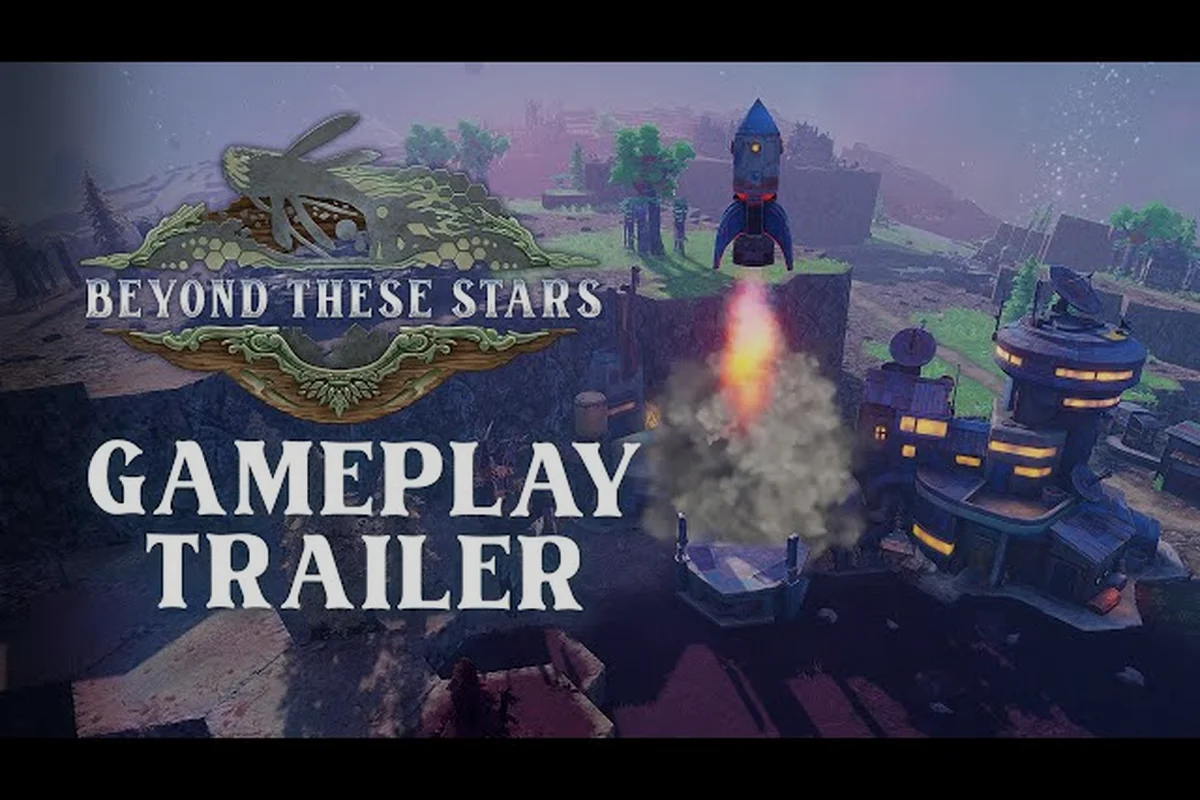
Beyond These Stars and Before We Leave share a creator, a city-builder heart, and a population of cheerful round-headed people called Peeps — but the new release swaps a hex-tile Earth-rebuilding sim for a sentient Space Whale carrying your settlement across a living galaxy. The connections run deeper than branding: many of the design patterns returning players will recognize, from terraforming tools to adjacency bonuses, have been re-tuned for interstellar travel. Here is how the two games link up, where they diverge, and what the Beyond These Stars quality of life pass adds on top of the studio's previous work.
Shared Design DNA Between the Two Cozy City Builders
Balancing Monkey Games is a small eight-person studio out of Dunedin / Ōtepoti, New Zealand, and the same hands that shaped Before We Leave returned to build this follow-up. The studio describes Beyond These Stars as the natural next step rather than a sequel: the Peeps return as your people, the cozy city-builder DNA carries over, and the UI vocabulary will feel familiar to anyone who has played Before We Leave on Steam. The deeper question is which systems, which inputs, and which feedback loops are inherited — and how the team has tuned them for a setting that no longer sits on a single planet.
The Peeps Carry Over — But They Are Not the Same Game
The single biggest through-line is the Peeps themselves: your people, including the two non-working types Children and Elders, appear in both titles with the same round silhouette and the same household-driven colony behavior. Players who built cities in Before We Leave will recognize how a Peep walks to work, picks a shift, holds a sign during a strike, and gathers with neighbors when a Celebration triggers. According to the official Before We Leave game page, the studio deliberately carries that identity forward rather than reinventing it.
What changes is the context. In Before We Leave, Peeps rebuild six underground biomes after an asteroid collision; in Beyond These Stars, they live on the back of a giant sentient Space Whale named Kewa, who is the ground you build on and a character with needs, wants, and dialogue. The Before We Leave world was a single planet; Beyond These Stars unfolds across a galaxy map you progressively unlock, with a Scout Ship you pilot alongside the character José and a Settlement Ship that ferries Peeps to new planets. The shared identity is the population; the shared setting is the cozy city-builder genre; everything else has been re-engineered.
Why the Comparison Matters for New Players
The connection matters because both games are often recommended together in cozy-gaming lists, and returning players want to know whether their muscle memory will transfer. The honest answer is yes for the basic loop (build, gather, terraform, manage happiness) and no for the pacing (Before We Leave's progression is planet-locked; Beyond These Stars is galaxy-scale and gated by the Galaxy Map and Solar System View mechanics introduced in Dev Blog #28). For a brand-new player who has played neither, the comparison is even more useful: it tells you which of the two to start with and what to expect when you do.
| Shared Element | Before We Leave | Beyond These Stars | What Changed |
|---|---|---|---|
| Peeps | Round-headed, household-driven, single planet | Same Peeps, but living on a moving Space Whale | New setting, same identity |
| Genre | Cozy city builder, hex grid | Cozy city builder, freeform | Grid lifted, adjacency logic kept |
| Scale | One planet, six biomes | One whale + multiple planets | Galaxy Map and Space Port travel |
| Terraforming | Dig canals, plant forests, restore biomes | Dig canals, plant trees, manage biome health | Pollution and tree density now tied to Kewa's wellbeing |
| Adjacency bonuses | Yes, layout affects production | Yes, layout affects efficiency and travel time | Travel time is now a heavier factor because of galaxy travel |
The table makes the shape of the comparison obvious: the bones of the design come from Before We Leave, but the flesh is new. The Beyond These Stars quality of life pass is one of the clearest answers to "what is new" and the most practical reason a returning player will want to upgrade. Several of the rough edges that Before We Leave players reported on Steam have been addressed — and a few entirely new conveniences are introduced because the setting demands them.
Where Beyond These Stars Pulls Ahead in Quality of Life
Faster Onboarding for First-Time Players
The single biggest new-player improvement is the Home Spaceship, an early building that slowly produces what your first Peeps need, including a starter population, basic food, and a workspace. Before We Leave's opening minutes could feel directionless; Beyond These Stars opens with a spaceship that functions as both a tutorial anchor and a slow but reliable resource drip. According to Dev Blog #29, the Home Spaceship is also the place where your first conversation with Kewa triggers, which unlocks the Solar System View and gives you an immediate sense of what the rest of the game will ask of you.
The recommended play order is also explicit: the developer advises new players to start in Story Mode rather than Sandbox. Story Mode walks you through the building, management, terraforming, research, and Kewa-care loops one at a time, which is essential because the game does not pad its tutorial with hand-holding. Sandbox Mode, described in Dev Blog #27, lets you choose which resources, water distribution, terrain, planets, and starting conditions you want, and is the right destination once the basic loop is in your hands.
Cleaner Production and Happiness Feedback
Production in Beyond These Stars uses a much more legible adjacency model than its predecessor. You still place buildings and let layout affect efficiency and travel time, but the new Happiness, Pollution, and Biome Health meters are more readable and tie into visible systems. Planting trees reduces pollution, the Cleaner Peeps mix Water and Chemicals to address pollution more directly, and the Tree Nursery is an indirect but reliable way to keep the biome healthy, exactly the feedback loop that Dev Blog #29 describes.
The same clarity runs through Strikes and Celebrations. Dev Blog #23 explains that a first strike lasts three shifts, comes with a goal tied to the root cause, and can be ended early; striking Peeps hold signs and block other Peeps, slowing them visibly. Dev Blog #22 explains that a Celebration triggers when enough Peeps in one location pass a high happiness threshold and grants production, movement, and sickness bonuses. Both are real, observable systems; neither requires the player to dig through an undocumented meter.
Sickness, Mourning, and Wellbeing Made Visible
Sickness, Death, and Mourning are first-class systems in Beyond These Stars, and they are among the most tangible Beyond These Stars new features for players who found Before We Leave's population management a little opaque. Dev Blog #25 states that sickness chance rises at the start of a shift as Peep energy falls, and that the Apothecary is the building that heals sick Peeps. The same blog noted that the Apothecary's texture was pending at the time, and the building ships in the 1.0 release.
What players actually see, then, is a chain: low energy raises sickness risk, the Apothecary treats it, the Fairground holds Celebrations, and Pew wellbeing is connected across multiple meters. The result is that the cozy loop has stakes without becoming punitive, which is exactly the kind of refinement that returning players will recognize as Beyond These Stars new features even if they cannot name the source.
| Quality-of-Life Area | Before We Leave (2021–2024) | Beyond These Stars (1.0) | Direction of Travel |
|---|---|---|---|
| First 10 minutes | Open-ended, hex-grid placement | Home Spaceship drip + Kewa dialogue | More guided, less disorienting |
| Resource clarity | Some hidden thresholds | Pollution, biome health, and Kewa happiness are visible | More readable |
| Worker feedback | Strikes and celebrations were softer | Strikes block traffic, Celebrations give stacked bonuses | More legible consequences |
| Production | Adjacency bonuses on a hex grid | Adjacency bonuses plus travel-time emphasis | Layout matters more |
| Map pacing | One planet, six biomes | Galaxy Map unlocks node by node | Longer arc, more surprise |
| Sandbox options | Limited | Resource / water / terrain / planet picker | More player control late-game |
The pattern is consistent: the systems that confused players in Before We Leave are more legible in Beyond These Stars, and the new systems (Galaxy Map, Kewa dialogue, Space Port travel) have visible feedback from the moment they unlock. The Beyond These Stars Before We Leave differences are not cosmetic. Several core systems have been rewritten for the Space Whale setting, and a few have been added that have no analogue in the earlier game. Returning players should expect a real learning curve in three areas: travel, terraforming scale, and population mood.
Mechanics That Diverge, Not Just Evolve
Travel Becomes a Resource, Not a Shortcut
Before We Leave's travel was intra-planet: you moved Peeps and goods across a hex map. Beyond These Stars travel is interstellar, and the Beyond These Stars galaxy map controls it. Space Ports hold up to four Landing Pads each, and each pad takes one ship at a time. Ships shuttle between Space Ports, which means that the speed of your trade network depends on the placement of ports and the type of ship you build. There is no fast travel that bypasses the network; the network is the game.
The same idea applies to the Scout Ship, which is the early game ship you pilot alongside José to investigate nodes on the Galaxy Map. Nodes hold barren planets, space junk, strange objects, trade stations, and aliens, including the officially "infamous" and "cheeky" character Ublo from Dev Blog #26. Travel in Beyond These Stars is therefore an investigative loop, not a delivery loop, and that shift is the single biggest design change for returning players.
Terraforming Becomes a Planetary Health Loop
In Before We Leave, terraforming was the point of the game: dig canals, plant forests, and bring six biomes back from an asteroid-induced collapse. In Beyond These Stars, terraforming is one tool among several, and the planet is not the unit of play — the whale is. Digging canals, adding top soil, planting trees, and maintaining forests all still exist, and they are listed in the verified buildings, but the biome health of Kewa's back is the more important meter, because Kewa's happiness is tied to galaxy temperature (a hot galaxy drags Kewa's happiness down, and if it falls far enough Kewa starts emergency travel somewhere cold, per Dev Blog #29). The terraforming toolkit is therefore a tool for managing a character, not just a landscape.
The Tree Nursery is the indirect lever: plant trees to address pollution. The Cleaner is the direct lever: Peeps mix Water and Chemicals to scrub the biome. Composting handles organic waste. None of these buildings is framed as a pure resource sink; each is part of the loop that keeps Kewa content enough to keep moving.
Population Mood Has Two Characters, Not One
Before We Leave's population had one mood to manage. Beyond These Stars has two: the Peeps and Kewa. Peep mood is governed by food, clothing, energy, sickness, and Celebrations, while Kewa's mood is governed by dialogue choices, biome health, and galaxy temperature. Strikes, Celebrations, sickness, and Mourning are all Peep-side systems. The Peep's dialogues, plant-tree and canal preferences, and emergency-travel triggers are all Kewa-side systems. A new player who has only played Before We Leave will need to learn to read two mood bars instead of one, and to choose between short-term fixes (e.g., a Fairground boost) and long-term fixes (e.g., lowering galaxy temperature) depending on which mood is most at risk.
| Mechanic Family | Before We Leave Equivalent | Beyond These Stars Version | New Wrinkle |
|---|---|---|---|
| Map travel | Intra-planet hex movement | Galaxy Map + Solar System View | Ships, pads, ports |
| Terraforming | Restore six biomes | Manage Kewa's back | Pollution → Kewa happiness |
| Population mood | Peep happiness | Peep happiness + Kewa happiness | Two-mood management |
| Research | Tech tree | Research / Technology / Perks | Same shape, new perks tied to travel |
| Outposts | None | Outposts on nearby planets | Extends your supply chain off-whale |
| Aliens | None | Ublo + others | Story-driven, not combat |
The divergences are real, but they are extensions, not replacements. A player who finished Before We Leave will not feel that the new game is a different genre; it will feel like a wider game with the same cozy spine.
Practical Tips for Players Who Loved Before We Leave
If you are coming from Before We Leave and want the smoothest transition into Beyond These Stars, the comparison is the best asset you have. Three habits from the earlier game transfer directly, and three habits will actively hurt you.
Habits That Transfer
-
Read adjacency before placing production buildings. The adjacency bonus is still a thing, and the new travel-time emphasis makes it stronger.
-
Treat terraforming as a long-term investment. Canals, top soil, and tree cover pay off across an entire session rather than a single shift.
-
Keep two or three resource types in active circulation. The shift economy rewards having a primary resource, a secondary resource, and a small luxury resource, exactly as it did in Before We Leave.
Habits to Unlearn
-
Do not assume intra-planet movement is the bottleneck. Interstellar travel is slower, and the placement of your Space Ports and Landing Pads is the gating factor for trade.
-
Do not over-rely on a single mood bar. Peep happiness and Kewa happiness are tracked separately, and ignoring Kewa triggers emergency travel.
-
Do not skip the early Story Mode opening. The Home Spaceship, Kewa dialogue, and Scout Ship loop in the first hour are the tutorial for the rest of the game, and Sandbox Mode will feel cold without them.
The single most useful preparation is to read the official developer's documentation for the verified buildings and verified resources, because the resource list has grown (Wood, Wood Waste, Food Waste, Water, Chemicals, Wool, Cotton seeds, Shell, top soil, potatoes, soup, Sheep, Cows, Cold Weather Clothing, Warm Weather Clothing, Advanced Goods). The clothing, shell, and chemical loops are new, and they need their own supply chains. Planning the second loop before the first loop matures is the difference between a stable settlement and a Peep exodus.
What Returning Players Should Watch in the Post-Launch Window
Beyond These Stars launched straight to 1.0 on 2026-10-16, meaning the developer skipped Early Access entirely. The latest patch is Hotfix #1, which fixed Korean localisation in the language dropdown, a building-move blocking bug, and changed the Power Generator range line to show Power range instead of Pollution range. As of October 2026, the developer has not published any further patches, and the community is still very small: 26 reviews (21 positive, 5 negative) at the snapshot date, with Steam Guides just starting to populate.
Two things are worth watching over the next few months. The first is the official Beyond These Stars Steam Guides hub, which will accumulate community and developer guides as the population grows. The second is the developer Dev Blog cadence, which reached #29 before launch and which the studio uses to communicate changes to Kewa dialogue, ship behavior, and the Perks tree. The Beyond These Stars new features list will likely expand, and the question "what is new" will get a different answer six months from now.
The single most useful piece of advice for the post-launch window is to remember that, at the moment, third-party coverage is essentially non-existent. That is not a problem; it is a chance. The players who build the first helpful community guides, the first quality-of-life comparison posts, and the first Peep-and-Kewa care videos will shape how the game is taught to the next wave of players. The bones of Beyond These Stars are inherited from Before We Leave, and the cozy city-builder community knows how to write the playbook; the new layer is the Space Whale setting, and that part is waiting to be documented.
Frequently Asked Questions
Are Beyond These Stars and Before We Leave the same game?
No. They share a developer, a genre, and a population of round-headed people called Peeps, but the setting, scale, and core systems are different. Beyond These Stars moves the city onto a giant sentient Space Whale named Kewa, adds a Galaxy Map for interstellar travel, and re-tunes the adjacency, terraforming, and mood systems. Before We Leave stays on a single post-asteroid Earth with six biomes. The Beyond These Stars Before We Leave connections are real, but the two games are separate releases on separate store pages.
Do I need to play Before We Leave before Beyond These Stars?
No. Story Mode is designed to teach everything a new player needs, and the developer recommends playing it first regardless of prior experience. Returning Before We Leave players will recognize the Peep behavior, the adjacency bonuses, the terraforming tools, and the general cozy city-builder loop, which is a small advantage but not a prerequisite. The first conversation with Kewa and the early Scout Ship loop open up the rest of the game.
What are the biggest Beyond These Stars new features versus the older game?
The biggest Beyond These Stars new features are the Galaxy Map and the Solar System View, the sentient Space Whale Kewa as a character with dialogue and needs, the Scout Ship and Settlement Ship loops, Outposts on nearby planets, and a separate Kewa happiness meter that runs alongside Peep happiness. Quality-of-life improvements include a more legible adjacency model, a Home Spaceship that gives the opening minutes direction, and visible Strike and Celebration feedback. The verified buildings list (Apothecary, Fairground, Kitchen, Pasture, Weaver, Tailor, Tree Nursery, Cleaner, Burner, Trawler, Composting, Space Port, Landing Pad, Spaceship Builder, Settlement Ship) is the most concrete way to see what is new.
What quality-of-life changes should returning players expect?
The most useful Beyond These Stars quality of life changes for returning players are the readable Pollution and biome-health meters, the explicit Strike and Celebration triggers, the Home Spaceship onboarding anchor, the Sickness/Mourning visibility (Apothecary, energy-based sickness chance), and the Sandbox Mode resource / water / terrain / planet picker. Several Before We Leave rough edges (opaque thresholds, hex-grid lock-in, single-planet pacing) are addressed in the new release. The Beyond These Stars Before We Leave differences here are less about adding new toys and more about making the existing toys easier to read.
Is Beyond These Stars available on console or mobile?
No. As of the October 2026 launch, the game is Windows PC only, sold through Steam (app 2295060) and published by Hooded Horse. There is no Nintendo Switch, PlayStation, Xbox, or mobile version. The game also has no multiplayer, co-op, PvP, combat, bosses, microtransactions, or battle pass, so the Beyond These Stars new features list is entirely single-player and content-driven. The latest patch is Hotfix #1, and the developer has not announced any further platforms or modes.