
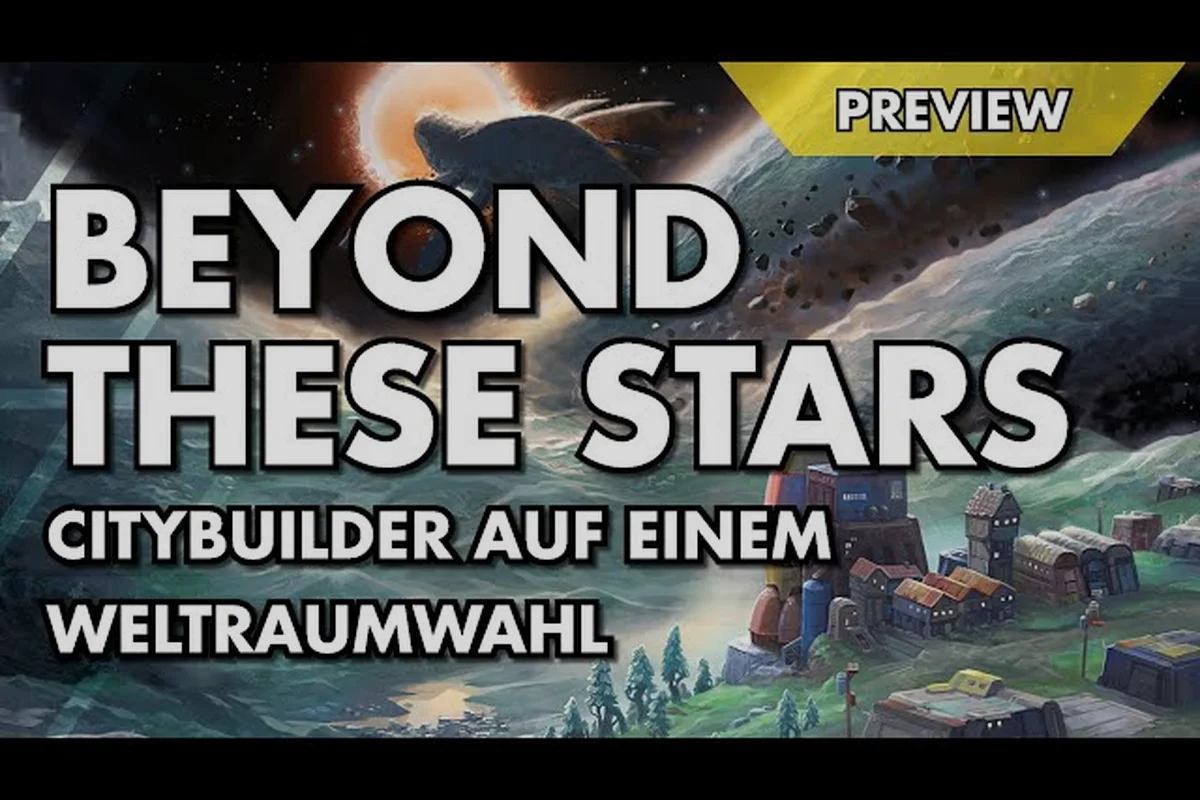
Beyond These Stars arrived on Steam on 2026-10-16 as a 1.0 release, skipping Early Access entirely, and many city-builder fans are still asking whether the launch is worth the price tag. This guide breaks down the core loop, the difficulty curve, and the writing on the wall from the first week of player reviews so you can decide before you buy. The short answer: it is a calm, narrative-driven colony sim with very different pressure than a survival builder, and the launch has shipped with a known hotfix already in place.
What Beyond These Stars Actually Is
Beyond These Stars is a single-player city builder developed by Balancing Monkey Games, the eight-person studio from Dunedin (Ōtepoti), New Zealand that previously made Before We Leave. The studio published the game through Hooded Horse, and on the Steam Community guides the tags list City Builder, Colony Sim, Base Building, Resource Management, Automation, and Sandbox. The setting is the back of a sentient giant Space Whale called Kewa, who carries your people — the Peeps — across the galaxy while you build on top of them.
The first thing to know about this game is that the central character is not a resource, a technology tree, or a city. It is a whale. Kewa has a happiness and health of their own, holds conversations with you, and reacts to the temperature of whichever star system you are flying through. According to the developer's own material on the Beyond These Stars official game site, the studio deliberately built the sequel to its earlier game around a relationship with the creature carrying your people, rather than around pure optimisation.
Mode Choice and What It Changes
There are two modes, and the developer recommends playing Story Mode first. Story Mode walks you through meeting Kewa, building your first Outposts, and uncovering the mysteries of the universe; it is the on-ramp the team designed. Sandbox Mode, which the studio detailed in Dev Blog #27, lets you choose which resources, water distribution, terrain, planets and more appear in the world. Sandbox is for players who already understand the loop and want to design their own scenarios.
| Mode | Best For | What You Control | Developer Recommendation |
|---|---|---|---|
| Story Mode | First-time players, narrative fans | Guided progression, named characters, full story arc | Recommended as the first playthrough |
| Sandbox Mode | Returning players, creators | Resources, water, terrain, planets, and other world parameters | Open after you understand the core systems |
The Peeps are the people you manage, and they include non-working types — Children and Elders — alongside the workers who staff your buildings. They get sick, hold strikes, throw celebrations, and need things like clothing, food, and rest. The Beyond These Stars launch announcement describes the early loop as building intricate supply chains, terraforming, researching technologies, and meeting aliens, with the developer's own Official Beginner's Guide covering building, managing your settlement, caring for your Peeps and Kewa, terraforming, technology, and perks.
Is Beyond These Stars Hard for a New Player?
The honest answer for a player asking beyond these stars is it hard is that the difficulty is uneven. It is not a punishing survival builder, but it is not a hands-off decorative builder either. The first few hours are gentle because the Home Spaceship slowly produces the basics your first Peeps need, and a named Peep called Jose rides in the Scout Ship that lets you investigate nearby nodes on the Galaxy Map. Once the second Outpost unlocks and you have to balance multiple production chains at once, the mental load jumps.
The launch Hotfix #1 (2026-10-17) addressed three real issues that would otherwise have inflated perceived difficulty: a missing Korean localisation entry in the language dropdown, a building-move bug that could block placement, and a Power Generator range line that had been showing the Pollution range instead of the Power range. None of these were game-breakers, but the range line bug in particular could quietly mislead new players who were trying to lay out clean power grids.
The Difficulty Curve, Roughly
| Game Phase | What's Happening | Pressure Level | What to Watch |
|---|---|---|---|
| First hour | Home Spaceship + a handful of Peeps, Jose on the Scout Ship | Low | Food, Water, and a basic place to sleep |
| Early Outpost | Second settlement, first alien encounter | Low–Medium | Wool and Cotton, Cold vs Warm clothing |
| Mid-game | Multiple planets, trade stations, terraforming, research tree | Medium | Pollution, biome health, sickness |
| Late game | Large network, shifting galaxy temperature, strikes | Medium–High | Kewa's happiness, strike management, Outpost logistics |
| Endgame | Galaxy Map expanding, Neutral Sector unlocked | High | Temperature-driven emergency travel, advanced research |
The Sickness and Death system is worth flagging. According to Dev Blog #25, sickness chance rises at the start of a shift as energy falls, which means a Peep who has been working hard without rest is more likely to fall ill. The Apothecary is the building that heals them, though Dev Blog #25 noted its texture was still being polished at that point. Mourning is also a real state, and it affects the mood of the wider community. This is the kind of soft pressure that the developer balances on purpose, and the launch numbers so far reflect that the curve is forgiving for story players and only moderately challenging for sandbox optimisers.
Core Systems You Will Touch in the First 10 Hours
A Beyond These Stars walkthrough has to start with the systems that are actually visible on day one, not the late-game ones. The Home Spaceship is the first thing most players interact with, and it slowly produces the basics your first Peeps need, so you are not thrown into resource scarcity immediately. The Kitchen turns ingredients into meals, the Pasture produces Wool on a planet with sheep, and Cotton seeds can be found in the world. The Weaver converts raw materials into fabrics, the Tailor turns fabrics into Cold Weather Clothing and Warm Weather Clothing, and the Tree Nursery is the indirect way to handle Pollution while the Cleaner is the direct way — Peeps mix Water and Chemicals at the Cleaner.
For players who want a deeper look at the buildings and what each one produces, the Beyond These Stars Official Beginner's Guide on the Steam Community hub walks through the early-game buildings and resource flows in the order the studio recommends.
Quick Reference: The First Buildings You Will Use
| Building | What It Does | What It Needs | What It Produces |
|---|---|---|---|
| Home Spaceship | Slowly produces the basics your first Peeps need | Nothing — it is the starter | Starter food, clothing, water |
| Kitchen | Turns ingredients into meals | Potatoes and other ingredients | soup and other prepared meals |
| Pasture | Holds animals, produces Wool on a sheep world | Sheep | Wool |
| Weaver | Converts raw materials into fabrics | Wool or other raw fibres | Fabrics |
| Tailor | Makes clothing from fabrics | Fabrics | Cold Weather Clothing, Warm Weather Clothing |
| Tree Nursery | Plants trees to address Pollution indirectly | Time and space | Trees (which absorb pollution) |
| Cleaner | Mixes Water and Chemicals to address Pollution directly | Water, Chemicals | Reduced pollution in nearby tiles |
| Burner | Can be set to consume Wood as a fuel | Wood | Power, by-product Wood Waste |
| Trawler | Harvests Shell from a body of water | A coast or water tile | Shell |
| Composting | Processes organic by-products | Food Waste, Wood Waste | Soil amendments |
One thing the developer has been explicit about: the game intentionally has no stone or ore deposits, no smelting chains, and no metal refining. The official position is that this is a deliberate design choice, so do not expect a mining layer, an electronics plant, or an alloy tier. If you enjoyed the resource ladder in games like Factorio, this is a different beast — supply chains here are about textiles, food, and wellbeing rather than a tech web.
Tips That Actually Help on a First Playthrough
The most useful beyond these stars tips collected from the official developer posts and the early community chatter cluster around a few repeatable habits. These are not secrets — they are behaviours the studio itself signposts in its Dev Blogs and the Official Beginner's Guide. These are not secrets — they are behaviours the studio itself signposts in its Dev Blogs and the Official Beginner's Guide, and if you want to see those principles applied in practice, our Beyond These Stars Story Walkthrough walks through the opening chapters in the same spirit.
Build the Home Spaceship First, and Don't Rush It
The Home Spaceship slowly produces the basics your first Peeps need, and the launch reveal emphasised that you should let it run while you terraform a sensible starting area. Players who try to skip ahead to Outposts before the Home Spaceship has stabilised supply often find themselves food-short within the first shift cycle.
Plant Trees Before You Pollute
The Tree Nursery is the indirect way to address Pollution, and Dev Blog #29 is explicit that planting trees, minimising pollution, and creating rivers are what keep the biome healthy. The Cleaner is the more direct way, but it consumes Water and Chemicals. New players report that laying out a Tree Nursery grid early saves a lot of Cleaner work later.
Watch Kewa's Temperature
Dev Blog #29 also states that a hot galaxy drags Kewa's happiness down, and if it falls far enough, Kewa starts emergency travel somewhere cold. This is not a flavour sentence — it is a real late-game driver, and it means the galaxy temperature on the Galaxy Map is a strategic variable, not a cosmetic one.
Use the Scout Ship and the Galaxy Map
The Galaxy Map is partially visible at first and unlocks over time, and Dev Blog #28 describes the nodes you can find: barren planets, space junk, strange objects, trade stations, and aliens. The Scout Ship with Jose is how you investigate those nodes before you commit ships to them. Trade stations are map-node features you travel to, not buildings you place, so do not waste a building slot expecting to build one on Kewa's back.
Mind the Shift Cycle
Shifts are the basic unit of time, and several systems key off them. Dev Blog #23 documents that the first strike lasts 3 shifts, that you get a goal tied to the strike's root cause, and that you can end the strike early. Striking Peeps hold signs and block other Peeps, which slows them. Sickness chance rises at the start of a shift as energy falls, per Dev Blog #25, so a tight shift schedule is a quiet productivity tax.
Celebrate When You Can
Dev Blog #22 explains that when enough Peeps in one location pass a high happiness threshold, they hold a Celebration at the Fairground, which grants production, movement, and sickness bonuses while it runs. The Fairground is the named building for this. A small, well-timed Fairground can offset a fragile supply chain in the early Outpost phase.
Using Adjacency Bonuses Well
Adjacency bonuses are real — the layout of your buildings affects both efficiency and travel time. The developer's Beyond These Stars news hub and developer blog archive is where each Dev Blog breaks these systems down, including the deep-dive production Dev Blogs and the terraforming and biome notes.
Is Beyond These Stars Worth It in 2026?
The beyond these stars is it worth it question turns on what you actually want from a city builder. It is worth it if you enjoyed Before We Leave and want a more narrative sequel on the same engine family, if you like colony sims that emphasise soft pressure (sickness, strikes, celebrations, biome health) over hard survival, and if you do not need a hundred-hour optimisation ladder. It is probably not worth it yet if your favourite thing about the genre is ore-to-circuit logistics, because that is intentionally absent.
The launch numbers are small but they are positive: 26 user reviews on Steam as of 2026-10-17, with 21 positive and 5 negative. The negative cluster has not been formally categorised yet because the sample is too small to be meaningful, but the common thread in the launch chatter is the difference between players expecting a survival sim and players expecting a narrative colony sim.
The launch price on the official Steam page is S$29.99 with a -20% launch discount running through the launch window, which puts the effective price at S$23.99. There are no microtransactions, no battle pass, and no paid DLC announced at 1.0. The game is Windows PC only, single-player, and has 64 achievements and 15 supported languages including English with full audio. If those basics line up with how you play, the value is solid for the price.
Worth-Buying Checklist
| If You Want... | Beyond These Stars Delivers? | Why |
|---|---|---|
| Narrative colony sim with named characters | Yes | Baz, Jose, Ublo, Matilda, Kieran, Jerry, N'Orva, Lottie — all from the official press kit |
| Pure ore-and-circuit optimisation | No | The developer has explicitly removed stone and ore deposits |
| 100+ hour optimisation sandbox | Eventually, in Sandbox Mode | Dev Blog #27 confirms a tunable Sandbox Mode, but the depth is still being explored |
| Console or mobile play | No | Windows PC only, per the Steam page |
| Multiplayer or co-op | No | Single-player only, per the Steam listing |
| Mods or Steam Workshop at launch | Not documented | The developer has not published mod support in the launch material |
Beyond These Stars Review Snapshot (2026-10-17)
This beyond these stars review snapshot is built only from the official sources, because the game shipped one day before this guide was written and third-party reviews and wikis simply do not exist yet. The Steam Community guides hub currently holds the developer's own Official Beginner's Guide and very few player-written guides. That is normal for a day-one launch and not a red flag — the studio has always maintained a tight, official-first content policy, and the official developer YouTube channel holds the Launch Trailer, the 1.0 announcement video, and a back catalogue of around 348 videos covering development diaries and building showcases.
For visual previews before you buy, the launch trailer is hosted on the studio's own YouTube channel under the title Beyond These Stars Launch Trailer (video id 07KbgbXA0cU). For third-party early-impressions, the Before You Buy Beyond These Stars, Watch This Review video by Tenkiei and the Beyond These Stars Gameplay (PC/Steam) video by OnGame Tips are both verified launch-window coverage.
What 1.0 Actually Changed
| Aspect | Before 1.0 (demo-era) | At 1.0 Launch (2026-10-16) |
|---|---|---|
| Release stage | Public demo | Straight to 1.0, no Early Access |
| Korean localisation | Not in the language dropdown | Added in Hotfix #1 (2026-10-17) |
| Power Generator range line | Showed Pollution range | Shows Power range (fixed in Hotfix #1) |
| Building-move placement | Could block placement | Fixed in Hotfix #1 |
| Modes at launch | Story Mode only confirmed | Story Mode + Sandbox Mode both available |
| Galaxy Map nodes | Partial in demo | Barren planets, space junk, strange objects, trade stations, aliens |
| Latest Dev Blog | Dev Blog #28 referenced at launch | Dev Blog #29 is the most recent official Dev Blog |
The honest closing take is this: Beyond These Stars is a thoughtful, narrative-first city builder that respects your time and your intelligence, and the launch has been clean enough to suggest the studio used its straight-to-1.0 strategy deliberately. The price is reasonable for a single-player colony sim with 64 achievements and 15 supported languages, and the worst-case downside is that you discover in hour three that you wanted ore smelting — at which point the Steam refund window is still wide open.
Frequently Asked Questions
Is Beyond These Stars hard for first-time city-builder players?
No, it is not a punishing survival builder, but it is not a hands-off decorative builder either. The first hours are gentle because the Home Spaceship slowly produces the basics your first Peeps need, and pressure ramps when you open a second Outpost and start balancing multiple planets. Sickness, strikes, and biome health become real constraints in the mid-game, and Kewa's happiness adds a late-game layer when galaxy temperature shifts.
Is Beyond These Stars worth the price on launch day?
At S$29.99 list (S$23.99 with the -20% launch discount), yes, if you want a narrative colony sim and do not need ore-and-circuit optimisation. There are no microtransactions, no battle pass, and 64 achievements, plus 15 supported languages. If your favourite part of the genre is a long metal-refining ladder, the developer has explicitly removed stone and ore deposits from the game, so this is not the right fit.
How long is a Beyond These Stars walkthrough?
The developer has not published a precise campaign length, because the game shipped on 2026-10-16 and third-party timing data does not exist yet. The systems are designed for long sessions — Sandbox Mode, in particular, lets you choose which resources, water distribution, terrain, planets, and more appear, which is the kind of knob that supports very long playthroughs once the community has had time to explore it.
Does Beyond These Stars have multiplayer, co-op, or PvP?
No. The game is single-player only, per the official Steam listing, and there is no co-op, no PvP, and no shared-world mode. There is also no modding API or Steam Workshop at launch, and the developer has not published mod support in the launch material.
Does Beyond These Stars have combat, bosses, or enemies?
No. The game has no combat system, no enemy waves, and no boss fights. The tension comes from soft pressure: sickness, strikes, pollution, biome health, and Kewa's happiness in extreme galaxy temperatures. The developer's own joke in Dev Blog #29 about unhappy Kewa eating settled planets is explicitly not a mechanic.