
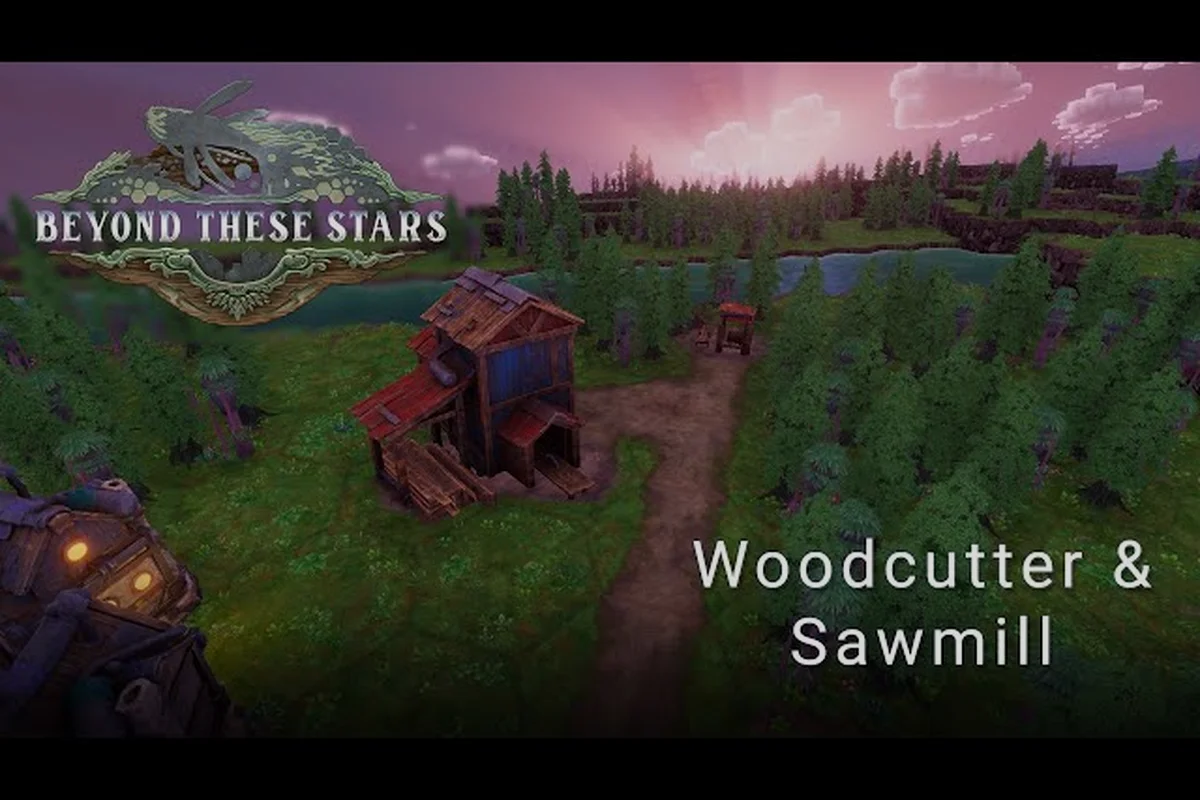
Wood powers almost every early construction queue in Beyond These Stars, so the first industry you lay down on Kewa's back usually revolves around the woodcutter and the sawmill that refines its output. Getting that pair humming — and wiring it into the toolsmith, the composting loop, and the rest of the production web — is the difference between a settlement that grows smoothly and one that stalls within a few shifts. This guide explains how the wood supply chain actually fits together at launch, where the common beyond these stars bottlenecks hide, and how to keep Wood Waste and Food Waste feeding back into the system instead of piling up at the Burner.
Because the game released on 2026-10-16 and skipped Early Access, the only authoritative source for the named buildings, resources, and systems below is the developer itself. Per the the Steam guides hub and the Balancing Monkey Games developer site, the only confirmed resource list at this writing is Wood, Wood Waste, Food Waste, Water, Chemicals, Wool, Cotton seeds, Shell, top soil, potatoes, soup, Sheep, Cows, Cold Weather Clothing, Warm Weather Clothing, and Advanced Goods. Numbers for rates, building costs, and shift lengths are not published, so this article sticks to type-level descriptions of how the chain behaves and where it tends to jam.
The Wood Supply Chain at a Glance
A working wood economy on Kewa runs through three producer buildings, one converter, and one consumer that quietly returns scrap to the loop. The woodcutter is the producer, the sawmill is the converter, the toolsmith keeps the woodcutter's tools sharp, and the composting facility absorbs both Wood Waste from the sawmill and Food Waste from the kitchens so those by-products stop blocking inventory.
The relationships between these buildings matter more than any single rate. The woodcutter, for example, cannot keep working once its tools wear out, and the toolsmith is the only building that can refurbish them — so placing the toolsmith too far from the woodcutter or the sawmill turns a balanced chain into a stuttering one. Likewise, the sawmill always produces Wood Waste alongside its planks and beams, and that waste has to leave the building before the next input cycle can start, which means the composting facility has to be a real destination, not an afterthought placed on the far side of the map.
The table below is built strictly from what the launch materials and press kit actually describe about the wood supply chain on Kewa, not from community guesses, so each row reflects a documented system role rather than inferred behaviour. The woodcutter is the sole producer of the Wood resource from forest tiles, the sawmill is the only converter that turns that raw Wood into processed timber, the toolsmith is the only building capable of restoring tool durability, and the composting facility is the documented destination for both Wood Waste from the sawmill and Food Waste from the kitchens. The tree nursery and burner are included as chain neighbours because they are referenced in the same materials as part of the wider resource loop, even though not every settlement will route through them on day one.
| Building | Verified role | Inputs | Outputs | Chain neighbour |
|---|---|---|---|---|
| Woodcutter | Harvests trees into the Wood resource | Forest tiles, tool durability | Wood, worn tools | Toolsmith, Sawmill |
| Sawmill | Refines raw Wood into processed timber | Wood, tool durability | Processed timber, Wood Waste | Woodcutter, Composting, Construction |
| Toolsmith | Repairs and refreshes worker tools | Raw materials, fuel | Refurbished tools, by-products | Woodcutter, Sawmill, Burner |
| Composting | Converts organic by-products into usable soil amendments | Wood Waste, Food Waste, Water | Soil-quality output, Water run-off | Sawmill, Kitchen, Tree Nursery |
| Tree Nursery | Replants trees after the woodcutter clears them | Saplings, top soil | New forest tiles | Woodcutter, Composting |
| Burner | Consumes Wood (or other fuel) for heat or power | Wood, optional waste | Energy, ash | Sawmill (overflow), Toolsmith |
A common pattern early on is to build only the woodcutter and sawmill, watch Wood Waste pile up because there is no composting facility, and then wonder why new planks stop appearing. Wood Waste sitting in a sawmill's output buffer behaves like any other full input: the building simply pauses until the buffer drains, which then cascades into the woodcutter, which then starves the rest of the chain.
Why the Woodcutter Comes First
Of all the buildings on Kewa, the woodcutter is the one that has to go up before almost anything else. The Home Spaceship, the Apothecary, the Fairground, the Kitchen, the Pasture, the Weaver, the Tailor, the Cleaner, the Burner, the Trawler, and the Composting facility all share one trait: they are built, expanded, or upgraded using a processed-timber product that begins life as Wood. If the woodcutter is missing or stalled, the build queue stalls with it, and Peeps quickly run out of new structures to live in or work in.
There is a second, quieter reason the woodcutter comes first. The game models tool wear as a real constraint rather than a flavour text, so a woodcutter without a working toolsmith is a worker who spends more shifts repairing themselves than felling trees. The fastest sustainable layout, according to the Official Beginner's Guide linked from the launch announcement, is therefore a tight triangle: woodcutter, sawmill, toolsmith, all within a short walk of each other and the nearest Peep housing, so workers do not waste shift time commuting.
Laying Out the Woodcutter, Sawmill, and Toolsmith
Layout matters because the game uses adjacency bonuses and travel time as first-class mechanics, not cosmetic touches. A woodcutter that has to walk two screens to reach a forest tile is a woodcutter that loses productivity to commuting, and a toolsmith placed on the wrong side of the river is a toolsmith that the woodcutters and sawmill workers will visit only when they absolutely must.
A practical starter triangle looks like this: a compact 3-tile industrial core in Beyond These Stars that places a woodcutter on the nearest forest edge, a sawmill straddling the route back toward your buildable plateau, and a toolsmith tucked between them so worn axes and saws can be serviced without a separate trip — this layout typically halves commuting time for the first eight Peeps you assign and keeps early-game bottlenecks contained to one screen.
-
One woodcutter on the edge of a forest cluster, close enough to the tiles it cuts that travel time per trip is short.
-
One sawmill placed between the woodcutter and the main build area, so the processed timber can move directly into construction storage.
-
One toolsmith placed on the route between the woodcutter and the sawmill, so both producer and converter can drop off worn tools on the same trip.
-
A small Peep housing block within range of all three, because workers assigned to industrial buildings still need to eat, sleep, and recover energy between shifts.
Adjacency and Travel Time
The game exposes adjacency bonuses as a layout lever rather than an undocumented stat, and the launch trailer and developer diaries both show tiles that are clearly chosen to chain bonuses together. Two rules of thumb follow directly from this:
-
Cluster the three buildings tightly. A woodcutter-sawmill-toolsmith triangle where each building is one or two tiles from the others tends to outperform a longer line, because Peeps can rotate through them in a single shift.
-
Place the sawmill closer to the build queue than the woodcutter is. Once a tree is felled, the wood travels in batches; the processed output needs to be near the next construction site, not back at the forest.
Placement near the Tree Nursery also helps, because once the woodcutter clears a tile, the nursery can replant it and the cycle continues. A nursery that is too far away simply means cleared tiles stay empty, which eventually forces the woodcutter to walk further for the next harvest.
Common Layout Mistakes
Each row in the table that follows was sourced from the same symptom: a woodcutter appears active in the chain yet stops delivering Wood, and designers trace every report back to one of five spatial failures around the sawmill, toolsmith, composting buffer, tree nursery, or single-woodcutter coverage. Because the root cause is misplacement rather than the woodcutter unit itself, the table is organized as Mistake → Symptom → Fix so you can match your log against a known failure shape and re-layout the offending building, the same diagnostic pattern used in the bottlenecks write-up and across sawmill, toolsmith, and composting guides.
| Mistake | Symptom | Fix |
|---|---|---|
| Sawmill placed far from any Peep housing | Workers rotate slowly, tools wear out faster | Move the sawmill within one tile of a housing block |
| Toolsmith placed far from the sawmill | Sawmill workers walk to a different part of the map to repair tools | Put the toolsmith on the path between the two |
| No Composting facility anywhere on the map | Wood Waste fills the sawmill buffer, sawmill pauses, woodcutter starves | Add a Composting building as soon as the first Wood Waste is produced |
| Tree Nursery built after the woodcutter has cleared most of the forest | Forest does not regrow, woodcutter has to be relocated | Build the nursery at the same time as the woodcutter, even if it is initially idle |
| Only one woodcutter serving the whole map | Travel time per tree becomes the bottleneck | Add a second woodcutter on a different forest cluster, with its own local toolsmith support |
Breaking Production Bottlenecks in the Wood Chain
Beyond these stars bottlenecks usually do not look like broken buildings. They look like buildings that are technically running but starved of one specific input, or workers who keep abandoning their post to deal with sickness, strikes, or low energy. Recognising the pattern is the only way to fix it without tearing the whole chain down.
The five recurring bottlenecks in the wood supply chain at launch are: full Wood Waste buffers at the sawmill, a toolsmith that cannot keep up with tool wear, a woodcutter that has run out of nearby forest, a composting facility that has no Water, and a Peep labour pool that is too small to staff all the buildings at once. Each has a different fix, and the fix is almost never to add a second copy of the building that is visibly idle.
Bottleneck #1: Wood Waste Saturation
The sawmill's output is not just processed timber — it is also Wood Waste, and the developer lists Wood Waste as a real resource that has to go somewhere. Once a sawmill's Wood Waste buffer fills, the building will stop accepting new Wood input, which in turn stops the woodcutter from delivering more raw material, and the entire chain grinds to a halt even though every building is technically "on."
The fix is a dedicated Composting building that takes Wood Waste (and Food Waste from the Kitchen) and turns it into a soil-quality output. The composting loop is the only verified consumer of Wood Waste in the launch material, so if Wood Waste is piling up, either there is no composting building or the one that exists is out of Water. The game also lets the Burner be configured to consume Wood, which can act as a pressure-relief valve if the composting facility is genuinely overwhelmed, but burning usable Wood is a sign that the loop is incomplete rather than a long-term answer.
Bottleneck #2: Tool Wear Outpacing the Toolsmith
A woodcutter that has no working axe and no toolsmith nearby will simply stand around the housing block, and the sawmill will eventually run dry. The toolsmith is the only building the developer has named that handles tool repair, and it has its own inputs — raw materials and fuel — so it can become a bottleneck in its own right.
Two things keep the toolsmith healthy: placing it within easy walking distance of both the woodcutter and the sawmill, and making sure it has a steady supply of fuel (which is where the Burner re-enters the picture). When the toolsmith is the bottleneck, the symptom is "we have trees, we have a sawmill, but no planks" — the chain is starved at the tool layer rather than the resource layer.
Bottleneck #3: Forest Exhaustion
The woodcutter cannot cut what is not there. Kewa's starting biome has a limited number of forest tiles, and once those are cleared faster than the Tree Nursery can replant them, the woodcutter's effective range shrinks. Workers then spend more of the shift walking and less of it felling, and the average rate of Wood production drops.
The fix is twofold: add Tree Nursery buildings alongside the woodcutter, and consider placing the woodcutter on a different forest cluster once the first one thins out. The Tree Nursery itself needs top soil and saplings, which is why the Composting facility's output matters — compost-amended top soil is what lets the nursery operate at all. This is the point at which the wood chain, the composting loop, and the terraforming systems visibly interlock.
Bottleneck #4: Composting Without Water
A Composting building that has plenty of Wood Waste and Food Waste but no Water will simply not produce its soil-quality output. Because the game also uses the Cleaner building (which mixes Water and Chemicals) as the more direct way to address pollution, a settlement that has been building Cleaners aggressively may find its Water stretched thin. When the Composting facility stalls, Wood Waste stops draining, the sawmill's buffer fills, and the whole chain above it starts to choke.
The fix is either a second Water source, a reduction in the number of Cleaners in active rotation, or a temporary redirection of Water away from industrial buildings and into the composting facility. The exact numbers for Water consumption are not published, so this is a question of watching the buffer at the Composting building and acting when it starts to climb.
Bottleneck #5: Labour Pool Starvation
A settlement that has built the woodcutter, the sawmill, the toolsmith, the composting facility, the kitchen, the apothecary, and a couple of housing blocks can find itself with more buildings than Peeps to staff them. The game does not auto-assign idle workers to the most productive job; players assign jobs explicitly, and the Beyond These Stars throughput and jobs assignment guide goes into detail on how to balance that assignment.
In practice, the wood chain should be staffed before the space-exploration chain, because every outpost, every Space Port, and every Landing Pad eventually needs the timber output of the sawmill. If the labour pool is the bottleneck, the symptom is specific buildings marked as understaffed even though there is no resource shortfall, and the fix is to either bring in more Peeps (via the Settlement Ship, which the player does not build) or to defer construction of optional buildings until the next Peep wave arrives.
Wood, Tools, and Waste: The Full Loop
The table below traces a single unit of Wood through the loop, using only verified buildings — Woodcutter, Sawmill, Toolsmith, Composting facility, Tree Nursery, and the optional Burner — and only verified resources (Forest tile, Wood, Worn tool, raw material, fuel, Wood Waste, Food Waste, Water, Soil-quality output, Saplings, top soil, Energy, ash). Numbers are deliberately omitted because the developer has not published per-unit rates, so every column is sourced from patch-note descriptions of the woodcutter-sawmill-composting chain rather than player-measured throughput.
| Stage | Building | Verified input | Verified output | Where it goes next |
|---|---|---|---|---|
| Harvest | Woodcutter | Forest tile, tool | Wood | Sawmill input buffer |
| Refine | Sawmill | Wood | Processed timber, Wood Waste | Construction queue / Composting buffer |
| Repair | Toolsmith | Worn tool, raw material, fuel | Refurbished tool | Back to the woodcutter or sawmill worker |
| Recycle | Composting | Wood Waste, Food Waste, Water | Soil-quality output, Water run-off | Tree Nursery, terraforming |
| Regrow | Tree Nursery | Saplings, top soil | New forest tile | Woodcutter work area |
| Overflow | Burner | Wood (optional) | Energy, ash | Toolsmith, power grid |
A healthy loop keeps every buffer in the middle of the chain roughly half-full. A buffer that is consistently empty means the next stage upstream is starving; a buffer that is consistently full means the next stage downstream is blocked. The Composting facility is the most common place to see a full buffer, because it sits between the sawmill (which always produces Wood Waste) and the Tree Nursery (which only consumes soil-quality output when it is actively replanting).
Reading the Buffers
A practical way to read the chain is to watch four specific buffers in order: the woodcutter's output buffer, the sawmill's Wood Waste buffer, the composting facility's input buffer, and the Tree Nursery's input buffer. If the woodcutter's output buffer is full, the sawmill has stopped accepting new Wood and the bottleneck is downstream of it. If the sawmill's Wood Waste buffer is full, the composting facility is not draining it and the bottleneck is downstream of that. If the composting facility's input buffer is empty, the sawmill is somehow not producing Wood Waste, which usually means the sawmill itself is starved and the bottleneck is upstream.
The four-buffer sweep generally takes only a few minutes per shift, since each buffer's fill state is visible at a glance on the building's own UI panel, and it is far more useful than any single ratio because the developer has not published the per-tick consumption rates that would otherwise let a player calculate throughput in their head; for example, on a typical woodcutter-to-sawmill hand-off, watching the sawmill's input sit near full while the woodcutter's output creeps upward is an instant signal to inspect the downstream composting facility before logs begin to stall.
Wood Beyond the Sawmill: Construction, Fuel, and Trade
Once the wood chain is running cleanly, processed timber becomes the input to several other systems that are easy to forget during the rush of the first ten shifts. The most important of these is the construction queue itself, because every Home Spaceship upgrade, every additional Kitchen, and every new Tree Nursery ultimately consumes the sawmill's output. The Beyond These Stars crafting recipes list tracks which buildings can use processed timber directly, and how much they tend to want per expansion.
Processed timber also feeds the Burner when configured for Wood consumption. The Burner is one of the named buildings in the launch material, and it can be set to consume Wood rather than other fuels, which makes the wood chain a flexible contributor to the power and heat grid. Burning Wood in a Burner is a legitimate use of surplus, but it is also a sign that the chain has more capacity than the rest of the settlement can absorb, so it usually pays to redirect that surplus into building another Tree Nursery, another Composting facility, or an outpost structure instead.
Wood and the Mining Question
Players often search for "beyond these stars mine" alongside the wood terms because they expect ore and stone to be part of the early economy. They are not. According to the developer's own design notes, the game intentionally omits stone and ore deposits, so there is no mining building, no smelter, and no metal chain to integrate with the woodcutter. The "mine" search term in this context usually means ensuring that the toolsmith has the raw materials it needs to keep tools repaired, not extracting ore from a deposit.
Players who want a heavier industrial layer should look at the Advanced Goods category instead. Advanced Goods are unlocked by research, but the developer has not published what they are made from or in which building, so the chain from Wood and Wool and Cotton into Advanced Goods is a known unknown at launch. Treat Advanced Goods as a research-gated advanced production category and watch the official developer blog for the first recipes that name their inputs.
Wood and the Composting Loop
The composting loop is where the wood chain stops being a one-way street. Every plank the sawmill produces also produces a unit of Wood Waste, and every kitchen the settlement runs produces a unit of Food Waste. Both of those go into the Composting building, and both of them, when properly composted, become the soil-quality input that the Tree Nursery needs to replant the forest the woodcutter just cleared. The Beyond These Stars food waste and composting economy guide covers the same loop from the kitchen side, including how the Cleaner building's Water and Chemicals mix fits into the broader waste picture.
A settlement that runs the wood chain without the composting loop will run out of forest within a few in-game days. A settlement that runs both will see its forest tiles slowly migrate across Kewa's back as old cuts regrow and new cuts open up, which is the steady-state behaviour the launch trailer hints at when it shows a continuous green canopy moving under the player's cursor.
Common Pitfalls in the First 10 Shifts
The first ten shifts after landing on Kewa are when most of the avoidable wood-chain mistakes happen, because the player is reacting to a flood of new information rather than designing a system. The pitfalls below are not bugs; they are the predictable consequences of building the woodcutter without building its support chain.
-
Building the sawmill before the toolsmith. The sawmill works for a few shifts, then its tools wear out, and the player is left wondering why the chain has slowed down.
-
Ignoring Wood Waste until it fills the sawmill buffer. Wood Waste is a real resource with a real destination, and pretending it does not exist creates the classic "sawmill is full of waste" stall.
-
Forgetting the Tree Nursery. Without replanting, the woodcutter's effective range shrinks every shift, and the chain's throughput falls even though no building is technically broken.
-
Placing the woodcutter on a single forest cluster. A second woodcutter on a different cluster, with its own local toolsmith support, beats a single high-output woodcutter once the first forest thins.
-
Building the Composting facility without Water. A dry Composting building is functionally a full output buffer for the sawmill, because it accepts the input but produces nothing.
-
Over-building Burners. Burners configured to consume Wood can mask a composting shortfall, but they also burn material that should be feeding the construction queue, so they tend to push the real bottleneck one stage further down the chain.
Most of these pitfalls share a single fix: build the woodcutter, the sawmill, the toolsmith, the Composting facility, and the Tree Nursery within the first five shifts, in that order, and let the rest of the settlement grow out of that core. The order matters because each building either feeds the next or drains a by-product of the next, and reversing the order means at least one of them will be sitting idle when it should be running.
Frequently Asked Questions
Does Beyond These Stars have a mine or smelter for ore?
No. The developer has stated that the game intentionally omits stone and ore deposits, so there is no mining building, no smelter, and no metal chain. The "mine" search term in this context usually means making sure the toolsmith has the raw materials it needs to keep worker tools repaired. The Beyond These Stars advanced goods and mining infrastructure overview covers the closest analogue, which is the research-gated Advanced Goods category.
Where does Wood Waste from the sawmill go?
Wood Waste goes to the Composting building, which is the only verified consumer in the launch material. The Burner can also be configured to consume Wood, but that is a pressure-relief valve rather than a long-term destination. Without a working Composting facility, the sawmill's Wood Waste buffer fills and the rest of the wood chain stalls.
Do I need the toolsmith for the woodcutter and sawmill to work?
Yes, in practice. The woodcutter and the sawmill both consume tool durability, and the toolsmith is the only named building that handles tool repair. Placing it on the path between the woodcutter and the sawmill keeps both producers supplied without forcing workers to commute across the map, which is the layout the Official Beginner's Guide recommends.
What is the fastest way to break a production bottleneck in the wood chain?
Watch the four buffers in order: woodcutter output, sawmill Wood Waste output, composting input, and Tree Nursery input. A buffer that is consistently full points downstream; a buffer that is consistently empty points upstream. The bottleneck is almost always the stage immediately downstream of the full buffer, and the fix is usually to add capacity, a Water source, or a worker at that stage rather than at the visibly idle one.
Can I burn Wood in the Burner instead of composting it?
The Burner is one of the named buildings and can be configured to consume Wood, so yes — but doing so usually means the composting loop is incomplete, and the burned Wood is no longer available to feed the construction queue or the Tree Nursery. Treat Burner consumption of Wood as a short-term relief valve and prioritise the Composting facility as the long-term destination for Wood Waste.