
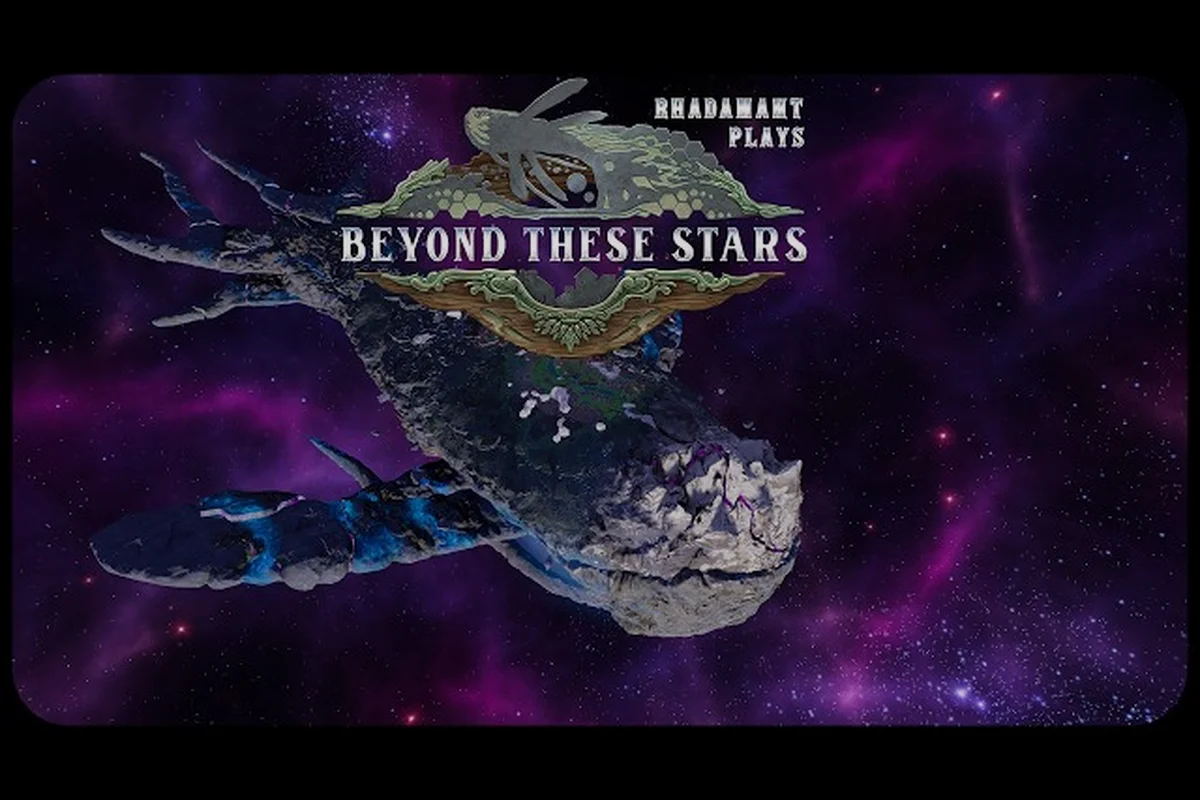
The moment Kewa nudges into a new sector of the galaxy, the sky above your settlement fills with unfamiliar shapes, and the question of what lives out there starts to feel urgent. Beyond These Stars alien quests are the loop that answers that question: every node on the Galaxy Map holds something, and most of those somethings want to talk, trade, or hand you an odd little prize. This exploration guide walks through the systems that turn a quiet colony into a real star-faring settlement. For the primary source, see the official press kit.
Understanding the Galaxy Map and How to Explore Beyond These Stars
The Galaxy Map is the gateway to everything outside Kewa's back, and Dev Blog #28 describes it as a partially visible canvas that unlocks over time as your settlement grows. Each node on that map can hold a barren planet, space junk, a strange object, a trade station, or aliens. Knowing how to read those icons is the first step toward profitable exploration, because it tells you whether a trip is worth burning fuel and crew hours for.
The Solar System View unlocks right after your first conversation with Kewa, and the Scout Ship becomes available as your first vessel. Jose pilots the Scout Ship, and the two of you investigate nearby nodes together. Once a node is investigated, the Settlement Ship can carry a colonization team to promising planets, and the Spaceship Builder at your Space Port lets you queue up additional vessels. If you want a more detailed breakdown of ship types and which one fits your current mission, the scout ship and trade ship overview is worth bookmarking.
What Each Galaxy Map Node Actually Contains
| Node type | What you find | Why it matters | Best follow-up |
|---|---|---|---|
| Barren planet | Settleable but empty terrain | Long-term Outpost candidate | Send a Settlement Ship and pick a landing site |
| Space junk | Salvage and derelict cargo | Cheap resources and crafting parts | Salvage with the Trawler-adjacent tools |
| Strange object | Unique curios with no obvious use | Often tied to alien quest chains | Hold onto it, aliens usually ask for these later |
| Trade station | Orbital market with alien merchants | Currency, rare food, and gossip | Park a Trade Ship and check inventory each cycle |
| Aliens | A named species with dialogue | Triggers an alien quest line | Accept the request, then check trade and junk nodes |
Reading the Map Without Wasting a Trip
Distance, node type, and your current technology all matter. The Galaxy Map stays partially obscured until you have surveyed enough sectors, so expect to see fog of war at the edges. The Neutral Sector, named in Dev Blog #28, holds a moderate-climate planet where chickens and cows can be found, which makes it a strong first target for new players. If you are still learning how to settle a planet, the best outpost planet selection guide covers how to compare candidates once you have a few options.
Travel cost and the risk of a hot galaxy also factor in. Dev Blog #29 warns that a hot galaxy drags Kewa's happiness down, and if the temperature drops far enough, Kewa will start emergency travel to a colder region. Burning fuel to reach a far node while Kewa is already miserable can snowball into a settlement-wide mood problem, so time your expeditions with the biome's health in mind.
How Alien Quests Start and What Triggers Them
Alien encounters in Beyond These Stars are not random: they happen at specific map nodes, and they only start once your settlement is stable enough to support extra crew. Dev Blog #26 introduces Ublo, an alien the studio calls "infamous" and "cheeky," and Dev Blog #28 places aliens among the things a Galaxy Map node can hold. So when you approach a node and your Scout Ship pings a living signature, you have a real conversation waiting for you, not a procedurally rolled event.
The trigger for most alien quest lines is a successful investigation of a node. Jose reports what the Scout Ship finds, and if the node is marked as an alien contact, the next screen asks you to send a ship to make first contact. The first contact scene usually involves picking a dialogue option, which nudges Kewa's happiness, and then the alien gives you a request. Sometimes the request is a trade, sometimes it is a fetch task, and sometimes it is a deeper question that sends you hunting for strange objects across several sectors.
The Three Common Quest Shapes
-
Trade requests — the alien wants specific resources, often a food or fabric type your settlement already produces. These usually unlock a new trade good at the nearest station.
-
Fetch requests — the alien wants a strange object you may or may not already hold. Strange objects drop from space junk and from the rare nodes scattered around the map, so exploration pays off.
-
Diplomacy requests — the alien wants you to deliver a message to another species. These chain, and the rewards tend to be the rarest in the game.
Why Named Characters Matter
The press kit lists the named in-game cast, and most of the aliens you will meet belong to that roster. When the quest text drops a name you recognize from the credits, the reward tends to be heavier, so do not ignore alien contacts just because the request sounds small. The earlier you build a relationship with Ublo and the other named species, the more options open up at trade stations later.
Trade Stations and the Orbital Economy
Trade stations are the orbital markets that float between sectors, and they are the most reliable way to convert surplus into something useful. Dev Blog #28 lists trade stations among the things a Galaxy Map node can hold, which means a trade station is a feature you travel to rather than a building you place. The only player-built space structures in the game are the Space Port, the Landing Pad, and the Spaceship Builder, so do not look for a "build trade station" button — there is not one.
When you dock at a trade station, an alien merchant opens a window of goods. Prices shift over time, and the merchant's inventory rotates, so checking in regularly is part of a healthy economy. A Space Port can hold up to four Landing Pads, each of which takes one ship at a time, so a single Space Port can park several trading vessels and keep the supply chain humming. Dev Blog #25 notes the Apothecary is the building that handles sick Peeps, and that kind of throughput is what a busy trade operation demands from your colony's back end.
What You Can Buy and Sell at a Trade Station
| Category | Common goods | Best time to sell | Best time to buy |
|---|---|---|---|
| Food and raw resources | Soup, potatoes, top soil, Water | When your settlement has surplus | When sickness or strikes drain stock |
| Clothing | Cold Weather Clothing, Warm Weather Clothing | During seasonal shifts | Before a known cold snap |
| Curios and trade goods | Strange objects, alien fabrics | When an alien quest demands them | Right after a new contact appears |
| Advanced Goods | Researched advanced items | Only after research unlocks them | Early in the cycle, when supply is thin |
Running a Trade Station Loop
The simplest pattern is: send a Trade Ship to a station, check the inventory on arrival, buy what your settlement is short on, and sell what the alien merchant values most. Each successful trip builds a small relationship score with the merchant species, and the next cycle's inventory gets slightly better. If you want a deeper look at routing ships between ports, the transporting resources between outposts guide is a good companion read.
The studio has not published specific price curves, so treat the rotation as a behaviour to observe rather than a formula to game. Players who check the same station for three cycles in a row tend to spot the rhythm, and that rhythm is what makes the alien economy feel alive instead of scripted.
Space Junk, Strange Objects, and the Salvage Layer
Space junk is the most common node type on the early Galaxy Map, and it is also the source of the most consistent rewards. Strange objects almost always come from junk nodes, and the right strange object is often the difference between finishing an alien quest in one trip and spending a full in-game week hunting for the right part. Dev Blog #28 specifically calls out space junk and strange objects as separate node categories, which means the game treats them as distinct exploration targets even though they tend to appear together.
Salvaging space junk uses the same basic loop as visiting any other node: send a ship, dock, and run the salvage interface. The Trawler is the verified building for harvesting Shell in the colony, and the same kind of throughput applies to space-based salvage. A Peep assigned to a junk node brings back a mix of standard resources and at least one strange object, and the strange object then waits in your inventory for the right alien quest to come along.
Strange Object Tiers and How to Use Them
| Tier | How rare | Typical alien request | Suggested response |
|---|---|---|---|
| Common | Found in most junk nodes | Trade top-up or simple fetch | Sell at a trade station if no quest needs it |
| Uncommon | Requires a deeper node or specific sector | Mid-tier alien diplomacy | Hold at least two in reserve for chain quests |
| Rare | Drops from unique nodes, sometimes alien contacts | End of a diplomacy chain | Never sell — every quest wants this eventually |
Building a Salvage Reserve
The cleanest approach is to keep a small stockpile of strange objects in a dedicated storage building before you accept any alien quest. Once the quest starts, you already have the part, and the chain moves forward in one trip. Players who raid junk as soon as the Galaxy Map reveals new nodes tend to finish alien quest lines in roughly half the time of players who wait for the request first.
Rewards, Reputation, and the Long-Term Payoff
Beyond These Stars alien rewards come in three flavours: direct resources, advanced unlocks, and long-term reputation with a species. The named cast in the press kit — Baz the Wanderer, José, Ublo, Matilda, Kieran, Jerry, N'Orva, and Lottie — represents the kinds of characters whose quests tend to pay the most, because the studio baked their personalities into the reward tables. A Ublo quest that started as a cheeky joke can end with a research unlock you would not otherwise have access to for several cycles.
Reputation is the part of the loop the developer has not published numbers for, so treat it as a felt system rather than a measured one. Community testing since the 2026-10-16 launch suggests that finishing a species' quest chain opens a permanent discount tier at that species' trade stations, and that the discount compounds with each new chain you complete. That is the type-level shape of the system: more quests done, more economic headroom unlocked. If you are also weighing where to put your first Outpost, the outpost tier list and planet ranking guide lines up with the kind of colony that supports a heavy alien quest schedule.
Comparing Reward Categories
| Reward type | Best for | Visible in | Pairs well with |
|---|---|---|---|
| Direct resources | Filling immediate gaps in food or clothing | Inventory screen | A Trade Ship on a short cycle |
| Advanced Goods | Long-term research goals | Unlocked after research | A full Shipment from a deep junk node |
| Reputation discounts | Steady-state economy | Trade station window after the chain ends | Several chains in parallel |
| Named-character favours | Special events, weather, Kewa dialogue | Triggered after chain completion | High happiness and low pollution |
When to Push and When to Pause
Pushing alien quest lines too hard has a cost: every ship you send is a Peep you are not running on Kewa, and the colony needs hands. The Apothecary, the Kitchen, the Tailor, and the Pasture all need working Peeps, and a skeleton crew starts to miss the simple rhythms of food and clothing production. The cleanest pattern is to run one alien chain at a time and let your normal production stabilize between chains. If you are still building the early economy, the settleable planets and outpost strategy guide is the place to read up on how to spread your crew without losing the production thread.
Common Mistakes and How to Avoid Them
The fastest way to stall an alien quest line is to sell the strange object the chain needed. The second fastest is to send a ship to a node that is too hot for the current galaxy temperature. Both errors cost real cycles, and both are easy to make in the first ten hours. A short list of the patterns that come up most often helps keep the colony moving.
-
Selling strange objects before checking the quest log — strange objects look like clutter, but every chain needs at least one. Keep a small reserve.
-
Ignoring Kewa's mood — Dev Blog #29 is clear that temperature drags Kewa's happiness down, and a sad Kewa starts emergency travel. Hot galaxies and long expeditions do not mix.
-
Overbuilding ships at a Space Port — a Space Port caps at four Landing Pads, and each pad holds one ship. More ships without more pads just queues them in orbit.
-
Treating the Neutral Sector as one option among many — it is a known early-game target with chickens and cows, so it is the strongest first stop for new players.
-
Skipping strange-object node types — they look like junk, but they are flagged separately, and they hold the items chains depend on.
-
Starting a diplomacy chain during a strike — Dev Blog #23 notes that strikes slow Peeps and block routes, and an understaffed colony cannot support a long chain.
Frequently Asked Questions
Where do Beyond These Stars alien quests start?
They begin when the Scout Ship investigates a Galaxy Map node flagged as an alien contact, usually after the Solar System View unlocks. Named characters such as Ublo often anchor the first chain, and Dev Blog #26 frames Ublo as a "cheeky" introduction to the broader alien cast.
What is the fastest way to earn alien rewards?
Combine junk-node salvage with one Trade Ship on a regular cycle. Strange objects from junk nodes feed fetch requests, while trade station runs supply the resources most alien merchants ask for. Finishing a chain in fewer trips is mostly a matter of pre-stocking the right strange object.
Are trade stations buildings you construct or nodes you visit?
They are nodes you visit. Dev Blog #28 lists trade stations among the things a Galaxy Map node can hold, and the only player-built space structures are the Space Port, the Landing Pad, and the Spaceship Builder. If you want a permanent orbital hub, the Space Port is the building to invest in.
What should I do with the strange objects I find in space junk?
Hold onto them until the quest log names one. Strange objects are the most common friction point in alien chains, and selling them early tends to mean a wasted trip later. A reserve of two or three uncommon pieces covers most mid-tier requests without cluttering storage.
How does exploring space junk fit into the rest of the colony?
Junk nodes are a parallel supply line rather than a replacement for the main settlement. They keep the economy fed with curios, supplement production between cycles, and feed the alien quest loop that unlocks long-term trade discounts. Treat the salvage operation as the colony's second engine rather than its first.