
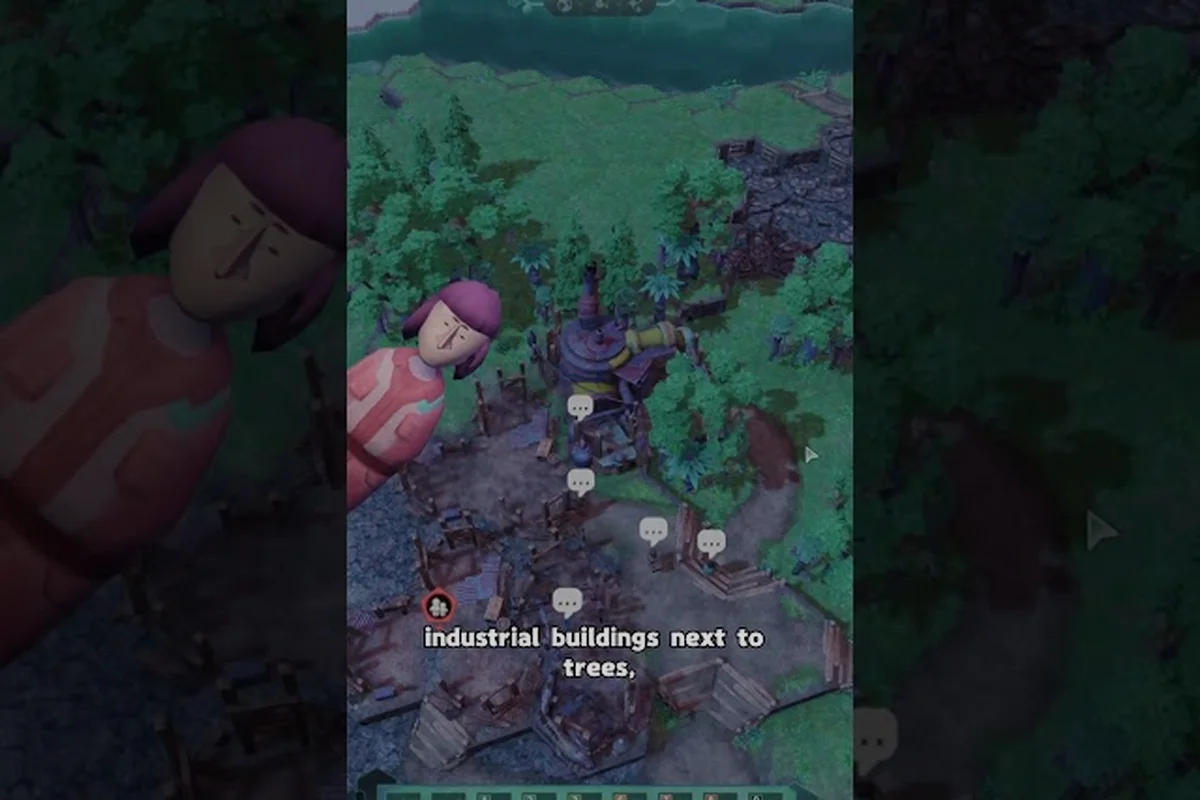
Beyond These Stars forests are the single most important terraforming layer in the game, because they sit between your landscaping work and the habitability number that decides whether new Peeps can settle a tile. If you understand how the Tree Nursery, water routing, and atmosphere interact, the difference between a struggling biome and a thriving colony comes down to a few repeatable decisions. This guide breaks down what forests actually do for atmosphere and habitability, how landscaping sets the stage for tree growth, and where a dam or irrigation plan changes the outcome. For the primary source, see Steam's Hotfix #1 patch post.
What Forests Actually Do in Beyond These Stars
Forests are not cosmetic. According to Dev Blog #29, planting trees, minimising pollution, and creating rivers are the three things the developer calls out by name when describing how to keep a biome healthy. That same post frames the forest as part of a triangle: tree cover, clean air, and flowing water. If any of those three legs is missing, the habitability rating on that tile starts to drift downward, and Peeps are less willing to live there, work there, or walk through there on the way to a shift.
The Tree Nursery is the only building the developer has named that produces trees directly. Peeps staff it, gather seedlings, and carry them to plantable terrain, where the trees take time to mature into a true forest tile. The exact growth time per species has not been published by Balancing Monkey Games, so treat nursery throughput as a feel-based number rather than a hard rate. What matters is that the cumulative tree count across a biome is what shifts the atmosphere and habitability readouts, not the moment a single tree is planted.
The Three-Layer Forest Model
You can think of the forest system as several interconnected layers stacked on top of each other, where each one supports the one above it: A common beginner mistake is to skip the landscape layer and go straight to planting trees. Without top soil or water nearby, the trees either refuse to plant or grow so slowly that the habitability number barely moves, which is why the terraforming walkthrough treats soil and water as a prerequisite for any meaningful forest expansion.
| Layer | Player-Visible Output | Developer-Verified Source |
|---|---|---|
| Landscape layer | Dig canals, raise/lower terrain, place top soil | Terraforming system, Dev Blog #29 |
| Forest layer | Tree Nursery output, mature tree count per biome | Tree Nursery building, Dev Blog #29 |
| Atmosphere layer | Pollution level, habitability rating, biome health | Cleaner building, Dev Blog #29 |
Atmosphere, Habitability, and the Forest Connection
Atmosphere in Beyond These Stars is the air-quality layer that sits on top of each biome tile, and forests are the natural way to keep it from drifting toward the polluted end of the scale. The Cleaner building is the direct pollution control method, mixing Water and Chemicals to scrub a polluted tile, but Dev Blog #29 also points to trees as an indirect lever: a tile covered in mature forest contributes to lowering the local pollution reading even when no Cleaner has been built there. That makes forests a cheaper long-term answer at the cost of being a slower one.
Habitability is the read-out that matters for settlement, because new Peeps arriving on Kewa will only commit to a tile if it crosses a habitability threshold. The developer has not published that threshold as a fixed number, so do not look for a "habitability must be 75" rule anywhere; instead, watch the in-game iconography, which flips from red toward green as the biome matures. Forests accelerate that flip because they cool the local atmosphere, trap particulate matter, and retain moisture near the surface.
How Pollution Counteracts Forest Gains
A forest cannot outgrow a Polluter. If you build a wood-burning Burner next to a Tree Nursery and leave it running, the pollution from the Burner can outweigh the absorption the trees provide, which means the habitability rating on that tile can still drop even though you have invested nursery time there. The practical play is to either offset the Burner with a Cleaner, or place the Burner on a tile you do not intend to settle.
The table below shows how a forest's effect on habitability can be scaled up or down by what you place next to it. None of these multipliers are published numbers, but the directional behaviour is consistent with the developer's Dev Blog #29 framing.
| Adjacent Building | Net Habitability Direction | Why |
|---|---|---|
| Tree Nursery | Positive | Reinforces forest cover, adds more trees over time |
| Cleaner | Strongly positive | Directly scrubs pollution from the air |
| Burner (idle) | Neutral | No active pollution, no bonus |
| Burner (burning Wood) | Negative | Active particulate output offsets tree absorption |
| Pasture | Slightly positive | Animal cover complements forest without adding pollution |
| Kitchen | Neutral to negative | Cooking fumes add a small pollution load |
Landscaping as the Foundation for Forest Growth
Landscaping is the landscaping layer that decides whether a tree even can be planted in a given spot. Top soil, in particular, is the verified resource that makes terrain hospitable to seedlings, and it is gathered and moved with the same terraforming tools you use to dig canals. The land expansion guide covers the resh-fueled side of reshaping terrain, but for forests specifically, the chain is: reshape the land, lay down top soil, route water, and then plant.
A dam and an irrigation plan come in at step three of that chain. A dam holds back water at a high tile, and irrigation is the gravity-driven spread of that water downhill and across adjacent flat tiles. Kewa's back is not a flat plane, so elevation matters: a dam placed on a hill that overlooks a stretch of bare dirt is a long-term investment, because the water it releases will keep the soil underneath your future forest moist enough for the Tree Nursery's seedlings to survive.
Dam, Irrigation, and the Water Triangle
| Water Source | Best Use | Forest Impact |
|---|---|---|
| Natural rainfall / planet climate | Baseline moisture for tile types that already accept it | Slow, low-control |
| Dam (player-built) | Stores water for dry periods, feeds irrigation | Stabilises a forest through dry shifts |
| Irrigation canals | Move water from a dam or river to flat tiles below | Expands the area a single dam can support |
| Rivers (canal-built) | Continuous water flow, doubles as Peep transport | Excellent for biome health, per Dev Blog #29 |
The canal and river guide covers how to chain canals into a proper river, but the key forest insight is that flowing water is what counts. A dam with no outlet is a pond; a dam with a canal that drops one elevation, then another, then feeds a flat stretch is the start of a forest corridor. If you want a shortcut, place the dam upstream of where you want the forest, not on top of it, because the dam itself will flood the tile it sits on and prevent tree growth there.
Building a Forest-Centric Biome from Scratch
The fastest path from a bare tile to a thriving forest biome is a four-stage pipeline. The stages are not optional, and skipping one of them is the most common reason a biome stalls out and never crosses the habitability threshold.
| Stage | Action | Building / Tool | Outcome |
|---|---|---|---|
| 1 | Reshape terrain, lay down top soil | Terraforming tools, resh fuel | Land is plantable, not rocky |
| 2 | Route water to the tile | Canal tool, dam | Moisture is reliable through dry shifts |
| 3 | Plant trees | Tree Nursery | Tree count climbs, atmosphere starts to clean |
| 4 | Manage pollution | Cleaner, careful Burner use | Pollution does not erase forest gains |
A practical sequencing tip: build the Cleaner before you finish planting the forest, not after. The first batch of trees will start absorbing pollution on day one, but if the Cleaner is not yet online, the very first Burner you fire up can wipe out a full shift's worth of tree-driven atmosphere gains. Once the Cleaner is in place, you can run the Burner intermittently to dispose of Wood Waste without losing biome health.
Common Forest Pipeline Mistakes
Three errors show up repeatedly when players report their biome stalling. The first is planting trees on tiles that have not received top soil, which leaves the seedlings with no rooting medium and effectively wastes nursery output. The second is building a dam on the same tile where you want a forest, which floods the land and prevents tree placement. The third is ignoring the temperature layer, because Dev Blog #29 confirms that a hot galaxy drags Kewa's happiness down, and an unhappy Kewa can trigger emergency travel to a colder region, which means your carefully built forest gets left behind.
For a deeper look at keeping the whole ecosystem in balance once the forest is up, the ecosystem health guide walks through the relationship between pollution, atmosphere, and biome stability, and it covers how to spread atmosphere into adjacent tiles once one tile crosses the habitability threshold.
Forests, Adjacency, and the Peep Factor
A forest biome does not just produce habitability points; it also acts as a Peep happiness modifier, because Peeps walking through a forested tile on their way to a shift pick up a small mood bonus from the scenery and the cleaner air. Dev Blog #22 describes Celebrations as a happiness-threshold event that grants production, movement, and sickness bonuses, and a tile of mature forest is one of the easier ways to nudge a cluster of Peeps across that threshold. So a forest is not only an atmosphere tool; it is also a productivity tool, because a Peep who triggers a Celebration is, for a short window, a faster, healthier worker.
Adjacency also matters for the Tree Nursery itself. Placing the Nursery next to a Kitchen or a Pasture does not improve the Nursery's output in any way the developer has published, but placing it next to a Cleaner does help, because the Nursery is one of the buildings most affected by local pollution, and a Cleaner next door keeps the nursery's tree-planting Peeps from getting sick on the job. The sustainable city guide goes deeper into the adjacency-stacking approach if you want to design a whole district around a forest biome.
Forest-Adjacent Building Cheatsheet
| Building | Place Near Forest? | Reason |
|---|---|---|
| Home Spaceship | Yes | Mood bonus helps early Peeps settle |
| Kitchen | Yes | Smoke offsets tree absorption slightly, but the mood gain is worth it |
| Pasture | Yes | Animal cover complements tree cover, no pollution conflict |
| Cleaner | Yes, on the upwind side | Scrubs the local air, protects forest from any nearby Burner |
| Burner | Avoid | Active Wood burning pollutes faster than trees can absorb |
| Tree Nursery | Inside the forest | Nursery Peeps benefit from the clean local atmosphere |
When the Forest Is Not Enough
There are situations where a forest, by itself, will not push a biome across the habitability threshold, and you need to bring in the other levers. The first is temperature: Dev Blog #29 ties Kewa's happiness to galaxy temperature, and a hot galaxy can pull the whole ecosystem down regardless of how many trees you have planted. The second is planet type: outposts on nearby planets can supplement what Kewa cannot supply, and on a planet with a colder climate you may need to wait for a temperature shift before the biome stabilises.
The third lever is research. Advanced Goods, which are unlocked by research, allow for more sophisticated buildings and clothing, and a Tailor producing Cold Weather Clothing for a cold planet frees up biome energy that would otherwise be spent on sickness prevention. The soil guide also flags terrain difficulty as a factor, because some planet tiles have a higher resistance to terraforming and will not accept top soil as readily as Kewa's back does.
When to Stop Planting and Start Cleaning
A mature forest stops adding habitability at the point where the tile is fully covered, and any additional nursery output on that same tile is wasted. The marginal return on planting more trees is roughly zero once you have a closed canopy, so redirect Tree Nursery output to the next biome over instead. A Cleaner, by contrast, scales linearly: the more Peeps you assign to a Cleaner, the faster that tile's pollution number drops, which means the Cleaner is the right answer for the "last 10%" of habitability gain that the forest alone cannot deliver.
Frequently Asked Questions
Do forests actually improve habitability in Beyond These Stars?
Yes, forests are one of the three biome-health pillars the developer names in Dev Blog #29, alongside clean air and flowing water. A tile of mature trees cools the local atmosphere, absorbs particulate matter, and contributes to the habitability rating that determines whether new Peeps can settle there, though the developer has not published a fixed threshold number.
How do I start a forest on a bare tile?
The reliable four-step pipeline is: reshape the terrain and lay down top soil first, then route water to the tile with a dam or canal, then staff a Tree Nursery to plant the seedlings, and finally place a Cleaner to scrub any pollution from nearby Burners. Skipping the top-soil or water step is the most common reason a forest fails to establish.
Does a dam help forests, and where should I place it?
A dam helps a forest by storing water that feeds downstream irrigation, which keeps the soil moist through dry shifts and gives Tree Nursery seedlings a better survival rate. Place the dam upstream of the forest corridor, not on top of it, because the tile under the dam will flood and refuse to accept tree plantings.
Can forests alone fix a polluted biome?
Not usually, because the Cleaner is the direct pollution control method the developer has named, and forests are explicitly described as an indirect lever. A practical split is to let forests handle the long-term baseline of pollution absorption, and to use Cleaners to scrub the heavy spikes that come from running Burners or Kitchens at full capacity.
How does landscaping interact with forests in Beyond These Stars?
Landscaping is the prerequisite layer, because top soil and reshaped terrain are what make a tile plantable in the first place. Without landscaping, Tree Nursery output goes to waste on tiles that cannot accept seedlings, which is why the developer sequences terraforming tools before forestry in every official example.