
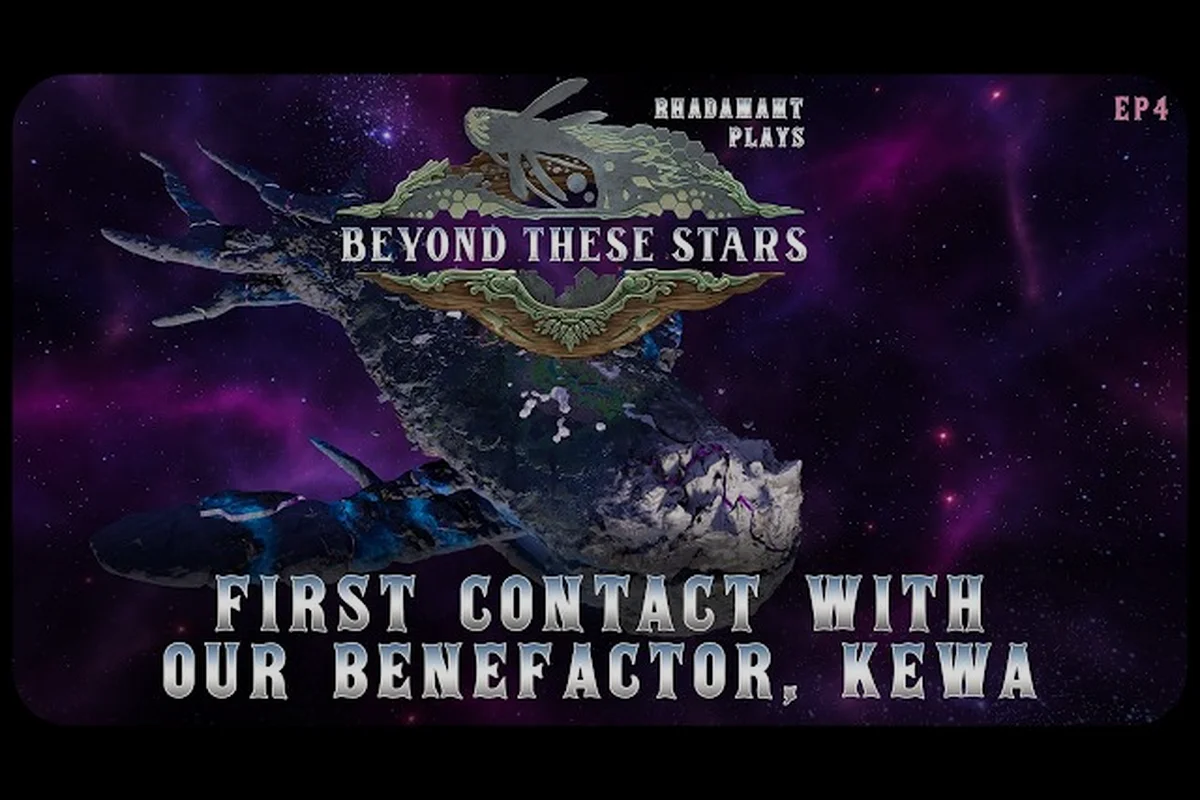
Toxic tiles spreading across Kewa's back are one of the first crises a new player faces in Beyond These Stars, and a surprising number of returning players reopen their settlements after a few hours and find green-brown stains crawling through their farmland. The Cleaner building exists exactly to fix this, but the dev blog and official beginner guide also describe a longer-term, indirect path through Tree Nurseries, canals, and careful terraforming that keeps the biome healthy in the first place. The bigger question — should you settle Kewa or a regular planet first — quietly decides how much of this pollution work you actually do, because Kewa's living plate responds very differently to contamination than a barren rock does. The settlement priority you pick on day one shapes how much toxic cleanup you sign up for later. For the primary source, see Dev Blog #29 on keeping Kewa happy.
Toxic Tiles, Pollution, and Kewa's Living Plate
Toxic tiles are the visual and mechanical representation of accumulated Pollution in Beyond These Stars. They are not a separate weather effect, and they are not an enemy attack — they are what happens when a building that produces chemical waste, a polluted river, or a long stretch of inefficient industry sits next to living terrain for too long. The Kewa plate is the part of the giant Space Whale that your Peeps actually build on, and because Kewa is a sentient being with their own happiness, the plate functions almost like a giant garden plot that reacts to what your city does to it. The same waste tile is read very differently on a barren rock in the Neutral Sector, which is part of why the first decisions you make about where to settle matter so much.
A few things are worth pinning down before you start scrubbing tiles, because the developer has not published exact thresholds and the community has had to reverse-engineer the difference between an "ugly tile" and one that is actively dragging down Kewa happiness on the plate. Dev Blog #29 only describes the system at the type level — that pollution is produced by buildings, rivers, and chemicals, and that trees plus low pollution plus flowing water keep the biome healthy — so anything more specific (parts-per-million values, per-building pollution output, decay timers, or the happiness pool number that triggers emergency travel) is inferred from playtesting, not published. That gap is exactly why so many players search for a hard answer to how to remove toxic contamination in Beyond These Stars, and it is also why the table below separates what the developer has stated from what the developer has not, so you can manage the system with the named tools without waiting for a formula.
-
Pollution source is buildings and rivers. Power Generators and any industry that uses Chemicals are the most common contributors, but Dev Blog #29 frames the system as the sum of everything you do on the surface.
-
Biome health is the bucket Kewa actually feels. Healthy biomes keep Kewa's happiness up, while a polluted one drags it down.
-
Temperature stacks on top of all of this. A hot galaxy pulls Kewa's happiness down faster, and if happiness falls far enough Kewa will trigger emergency travel to a colder region, which has its own consequences for any buildings left behind.
The developer has not published exact thresholds for when a tile officially becomes "toxic" or how many parts-per-million of pollution flip a green tile brown. The closest official language is the type-level description in Dev Blog #29: planting trees, minimising pollution, and creating rivers keep the biome healthy. Players reading that have to infer their own line between "ugly tile" and "actively hurting Kewa", which is why so many people look for a hard answer to how to remove toxic contamination in the first place. The good news is that the tools the developer has named are enough to manage the system at the type level, even without a published formula.
| System | What it actually is | What the developer has published | What the developer has NOT published |
|---|---|---|---|
| Pollution | A build-up that turns living terrain toxic | Type-level: produced by buildings, rivers, and chemicals | Exact ppm, decay rate, or per-building pollution output |
| Biome health | The overall state of Kewa's plate | Type-level: kept healthy by trees, low pollution, rivers | A fixed health number or a published threshold |
| Kewa happiness | Kewa's mood, separate from pollution | A happiness pool that responds to dialogue and conditions | The numeric threshold that triggers emergency travel |
| Toxic tile | The visual result of long pollution | Can be cleaned with the Cleaner and softened with trees | How many shifts a tile stays toxic before auto-clearing |
One quick note on how big all of this is. Community posts and early coverage tend to describe Kewa as "the size of a planet" because the plate behaves like one in gameplay terms — you can build a real city on it, you have weather across it, rivers run across it. The community nickname "Kewa Godzilla" comes from a popular early screenshot where Kewa's silhouette was compared to the kaiju, partly because of how the city is dwarfed when the camera pulls back. Neither of those framings is from the developer, who has been careful only to call Kewa a sentient giant Space Whale that carries your Peeps across the galaxy. If you want the deeper lore, the what is a space whale overview lays out what is officially confirmed versus what is community comparison.
Should You Settle Kewa or a Regular Planet First?
The decision the article is built around — settle Kewa first, or a normal planet first — is one of the quiet choices the game never formally asks you but always answers. The two paths produce very different pollution curves, and the answer most new players settle on depends on whether they read the official beginner guide in order or skipped straight to the Scout Ship. There is no in-game prompt that says "pick A or B", but the way the tutorial structures the first hours of play pushes you toward one path, while Sandbox Mode at least lets you turn the dial.
Path A: Settle Kewa First (the Story Mode Default)
This is the path Story Mode nudges you toward. You arrive, you talk to Kewa, you build your first Home Spaceship, and your first Kitchen, Apothecary, and Fairground all go on Kewa's plate. The reason pollution is so loud in this path is that the plate is alive — it visibly reacts to your footprint. A single Power Generator and a Kitchen with no offset will start staining tiles within a single shift, and if you ignore it for three or four in-game days the brown tiles will be touching your first Pasture.
The trade-off is that this path is the most forgiving place to learn. Kewa can take a hit, the official beginner guide treats the first 10-15 shifts on Kewa as a tutorial, and the Cleanup tools are never more than a single building unlock away. The community advice that has emerged in the first 24 hours after launch is essentially: expect to scrub, treat a Cleaner as a priority unlock on the same tier as your first Apothecary, and do not let your first river run straight into a populated area.
Path B: Settle a Barren Planet First (the Sandbox Shortcut)
The other path is to use the Scout Ship, courtesy of José, to investigate planets and put down a Settlement Ship on a barren rock in the Neutral Sector. Two things happen. First, the rock has no living biome, so pollution is more of an efficiency and happiness hit than a "hurt the planet" hit. Second, you skip the part of the early game where Kewa is the only surface you have. The downside is that Kewa still drifts through the galaxy with your Home Spaceship and Peeps on it, and you now juggle two settlements.
The dev blog describes a moderate-climate planet in the Neutral Sector that already has chickens and cows, so the barren-planet path can actually be gentler on the food supply than a naive Kewa-first run. The trade is complexity. The community nickname for this path is "the outpost rush", and players who try it on their first run tend to need the symbiotic relationship with Kewa guide to remember which city is actually doing what.
| Factor | Settle Kewa first | Settle a barren planet first |
|---|---|---|
| Pollution pressure on living tiles | High from shift 1 | Low; the rock has no living biome to stain |
| Cleanup buildings needed early | Cleaner, Tree Nursery, river reroutes | Mostly efficiency, not cleanup |
| Kewa happiness impact | Direct; toxic tiles drag it down | Indirect; mostly tied to dialogue and temperature |
| Tutorial support | Highest; the official beginner guide uses this flow | Lower; Sandbox-flavored learning curve |
| Best for | First playthrough, learning the system | Sandbox Mode, second city, or confident players |
The honest answer is that the game does not punish either choice, and the developer has not published a recommended path. What the official beginner guide does say, repeatedly, is that you need to start thinking about Pollution the moment your first Power Generator goes down. The settlement-priority debate is downstream of that.
How to Remove Toxic Tiles: The Direct Path
The fastest way to clear a toxic tile is the Cleaner building. The developer confirmed in the official launch material that the Cleaner is "the more direct way to address Pollution", and that Peeps inside it mix Water and Chemicals to do the work. This is the building to rush if you have a brown patch that is already spreading, because the alternative paths described in the next section take more shifts to show visible results.
The full direct-cleanup loop looks like this in practice: spot a brown-toxic patch on the map, drop a Cleaner at its centroid, route a river or Water building within reach, and pair it with a Composting plant that converts Wood Waste and Food Waste into the Chemicals input the Cleaner burns through. That five-step pipeline (Cleaner + Water source + Chemicals supplier + edge coverage with a Tree Nursery + source removal) is the only documented "fast" path the developer has confirmed in the launch material, and every shortcut past it — skipping Chemicals stockpiles, ignoring river rerouting, stacking Cleaners in one tile — tends to stall the cleanup on the same shift the brown patch first appears.
-
Pause the game and read the map. A single Cleaner has a working radius; build it in the centre of the worst patch instead of at the edge, because Peeps walking long distances between Cleaner and dirty tile is the most common reason cleanup stalls.
-
Confirm Water is in reach. Without a steady Water supply the Cleaner will idle. If your rivers are dirty too, the Cleaner is part of the problem — reroute or replace the river first.
-
Stock the building with Chemicals. The Cleaner consumes Chemicals as an input, so any time your Chemicals stockpile is empty the building simply stops working. A Composting building that handles Wood Waste and Food Waste is usually the easiest neighbour, because it shares the same logistics path.
-
Cover the edges, not just the centre. Toxic tiles tend to reappear at the border of a cleaned patch if the source is still active. Build a second Cleaner, or plant a Tree Nursery, at the boundary rather than stacking Cleaners in one spot.
-
Wait for the green to return. The developer has not published a per-shift cleanup rate, so the only honest description is type-level: a Cleaner converts tiles back to clean living terrain at a steady pace that depends on its inputs, with no guaranteed minimum.
The mistake most new players make is treating Cleaner as a one-off. Once the worst patch is clean, the source of the pollution is usually still there — a Power Generator with no offset, a Kitchen draining chemicals into a river, or a strip of buildings placed too tightly together. Adjacency bonuses in Beyond These Stars are double-edged: pack buildings together and you get an efficiency bonus, but you also concentrate the Pollution they produce. A well-placed Cleaner can soak a moderate amount of that, but it cannot keep up with a deliberately dense industrial block.
| Cleanup action | Time to first visible effect | Best use case | Limitation |
|---|---|---|---|
| Build a Cleaner | Within 1-2 shifts of inputs arriving | Active brown patches | Needs Water + Chemicals in range |
| Plant a Tree Nursery | Several shifts to show effect | Slow, permanent softening of a hot tile | Trees do not "scrub" — they offset future pollution |
| Dig a canal / reroute a river | Immediate on the river path, slow on tiles | Stop a river from feeding a polluted block | Rivers still need clean Water source |
| Demolish a polluting building | Immediate tile-by-tile | Last resort for a building that should not exist | You lose its production too |
The Indirect Path: Keeping the Biome Healthy
The longer game is not about scrubbing tiles one at a time. Dev Blog #29 explicitly says that planting trees, minimising pollution, and creating rivers are what keep the biome health high, and the official beginner guide echoes that framing. In other words, the dev's own advice is that preventing pollution is the real mechanic, and the Cleaner is the safety net. This is also why the Kewa happiness systems guide treats tree cover and river layout as core happiness inputs rather than aesthetic choices.
The indirect path is built on three interconnected pillars, each of which addresses a different vector of pollution rather than the symptom itself. Rather than reacting to stained tiles with the Cleaner, the system assumes you will spend early shifts investing in biome health through tree cover, river layout, and source reduction — three slow-burn mechanics that compound over dozens of shifts on the Kewa plate and turn the Cleaner into a contingency tool instead of a primary one. The logic mirrors how the Kewa happiness systems guide treats tree cover and rivers as core inputs rather than aesthetic touches, because in this game prevention scales where removal does not.
-
Tree cover. A Tree Nursery lets you plant trees that hold the soil and keep the biome in a healthy state. Trees are slow, but they accumulate. Once a forested area is established, the same Power Generator that was staining tiles in your first hour will barely make a dent.
-
River health. The developer has framed rivers as both an irrigation source and a biome-health signal. A polluted river pulls the surrounding biome down faster than a clean river. Digging canals to route clean water through the plate is one of the cheapest and most reliable ways to keep the system stable over dozens of shifts.
-
Source reduction. This is the unsexy pillar: not building a fourth Power Generator on top of three, not letting a Kitchen run next to a Pasture, and not leaving Wood Waste piles to rot into a Chemicals pipe. The dev's own dev blogs frame this as "minimising pollution", which is intentionally vague because the exact recipe depends on your layout.
The honest framing is that the indirect path is what experienced players settle into. The Cleaner stays in the build queue, but it is no longer the primary tool — it is the response to mistakes, not the plan. New players who try to build the perfect pollution-free city on shift 1 tend to get stuck because the game has not given them the tools yet. New players who build a dirty first city, learn the Cleaner loop, and then transition into tree-and-river management tend to do better.
Toxic Cleanup Scenarios: Matching the Tool to the Problem
Every settlement eventually runs into one of a small set of recurring pollution problems. Treating them as named scenarios rather than ad-hoc scrambles makes the system much more manageable, and it is also the easiest way to keep Kewa's plate looking like a city rather than a wasteland. The four scenarios below cover the cases the official beginner guide and dev blogs describe, plus a couple of community-reported patterns that have already shown up in the first 24 hours of launch coverage.
Scenario 1: The First Brown Patch
You have built your first Power Generator, your first Kitchen, and one or two production buildings, and a single tile next to the Power Generator has gone brown. This is the easiest case. Drop a single Cleaner on the edge of the patch, route Water to it, and let it work. The whole incident usually clears in a small number of shifts. The most common mistake is to also build a Tree Nursery in the same spot — pick one tool per patch, because mixing them muddles the input chains.
Scenario 2: The River of Sludge
A polluted river has started staining tiles along its entire length. The dev's own framing is that the river is a symptom, not the cause: look upstream for the building that is dumping Chemicals into the water. Fix that, dig a small canal to bypass the worst stretch, and then plant Tree Nurserys on the banks. You can also run a Cleaner near the river mouth, but only if you have a clean Water source upstream — otherwise you are pouring clean water on top of dirty water.
Scenario 3: The Industrial Block
A tightly packed industrial zone — several Power Generators, a Kitchen, a Trawler dock, a Composting building — has produced a brown ring around the block even though the river is clean. This is the adjacency-bonus trap. The honest fix is one of two paths: either pull the most polluting building out of the cluster and replace it with a Tree Nursery, or surround the block with a Cleaner perimeter. Both work; mixing them tends to leave gaps.
Scenario 4: The Hot Galaxy Spiral
You are in a hot region of the galaxy, Kewa's happiness is falling, and toxic tiles are appearing faster than your Cleaner can keep up. This is the most dangerous scenario because temperature stacks on top of pollution. The dev's answer in Dev Blog #29 is to engage Kewa in dialogue and keep conditions stable — if happiness falls far enough, Kewa starts emergency travel somewhere cold, which means your whole settlement may move. Keeping the pollution low is the single best way to slow the spiral; Kewa's temperature-driven travel behaviour is the mechanic the dev blog describes as the worst-case response.
Settlement Priority and Cleanup Workload
The question of "whale or Peeps first" — really "Kewa or barren planet first" — is the upstream decision that decides how much of the above you do. Players who settled Kewa first in the first 24 hours since launch consistently report a heavier cleanup workload in the first 10 shifts, but they also report that the official beginner guide's flow matches what they experienced. Players who settled a barren planet first report a lighter cleanup workload, but they had to learn the Scout Ship and Settlement Ship mechanics on top of the pollution system.
The honest comparison below uses Cleaner usage, Tree Nursery cycles, river reroutes, and Kewa happiness management as the four concrete axes that actually determine how heavy your first 10 shifts of pollution work will feel, because these are the only metrics that change meaningfully between the two settlement orders — Scout Ship travel time, Settlement Ship placement cost, and base oxygen drain stay roughly identical either way. On Kewa, the inland terrain forces at least one River Reroute token within the first six shifts to stop toxic runoff into the colony pad, which is why Cleaner consumption spikes early. On a barren planet, the flat landing zone rarely triggers reroutes, so Cleaner demand stays near zero until you ship-pollute Kewa later via the Scout Ship transfer loop.
| Workload type | Kewa-first | Planet-first |
|---|---|---|
| Cleaner usage in first 10 shifts | High | Low to none |
| Tree Nursery use in first 10 shifts | Moderate | Low |
| River reroutes needed | Common | Rare |
| Kewa happiness management | Direct, immediate | Indirect, via temperature and dialogue |
| Multi-city logistics | Single city | Two cities + ship routing |
For a first playthrough, the dev's own recommended path is Story Mode, which is functionally Kewa-first. The Planet-first path is the Sandbox-Mode shortcut, and the what does Kewa eat overview tends to be a useful companion for the food-supply side of either choice. There is no penalty for picking the "wrong" path; the game simply expects you to learn the matching cleanup systems either way.
A Repeatable Cleanup Routine
The fastest cleanup routine, given the tools the developer has confirmed, looks roughly like this. It is not the only way to play, but it is the pattern that lines up best with what Dev Blog #29 and the official beginner guide describe.
-
Shift 1-2: Place the first Cleaner before placing your second Power Generator. This is the single most common mistake new players make, because the urge is to expand production first.
-
Shift 3-5: Plant a Tree Nursery next to each Power Generator. Trees do not need a Peep to operate, so they keep working even if you go on a ship expedition.
-
Shift 5-10: Dig at least one canal that routes clean Water through the populated area. This both irrigates the Kitchen and gives the biome a clean spine.
-
Shift 10+: Transition to source reduction. Stop adding new Power Generators in the same block, start rerouting Chemicals production through a Composting building, and only build a Cleaner when a specific dirty patch appears.
The reason this routine works is that it treats the Cleaner as a safety net rather than a primary tool. Once you are running in this mode, the brown tiles that do appear are small, local, and fixable in a shift or two. Kewa's plate starts looking like a living biome again rather than a stain map, and Kewa's happiness stops being dragged down by Pollution. The wider game — research, ship expeditions, the Neutral Sector — becomes a lot more pleasant from that point on.
A final honest disclaimer: the developer has not published specific cleanup rates, pollution thresholds, or tile-decay numbers. Every "within a few shifts" estimate above is a type-level description of how the system behaves, not a quoted number. The mechanic is real, the tools are real, and the named buildings (Home Spaceship, Apothecary, Fairground, Kitchen, Pasture, Weaver, Tailor, Tree Nursery, Cleaner, Burner, Trawler, Composting, Space Port, Landing Pad, Spaceship Builder, Settlement Ship) are all confirmed in the official material. The exact numbers are the developer's to publish when they publish them. The first 24 hours of community coverage is too thin to back-fill that with anything reliable, so this guide sticks to what the developer has actually said.
Frequently Asked Questions
What is the fastest way to clean up toxic tiles in Beyond These Stars?
Build a Cleaner on the edge of the worst brown patch, route clean Water to it, and keep it stocked with Chemicals. The developer has confirmed that Peeps inside the Cleaner mix Water and Chemicals to do the work. The tile will return to clean living terrain within a small number of shifts, although the exact rate has not been published. For long-term stability, plant Tree Nurseries on the borders so new pollution cannot spread back in.
Should I settle Kewa or a barren planet first?
Story Mode, which the developer recommends for new players, is functionally Kewa-first. Sandbox Mode lets you settle a barren planet first, which produces less pollution work in the first 10 shifts but adds multi-city logistics on top of the cleanup system. Neither path is wrong, and the developer has not published a recommended priority. The Kewa-first path matches the official beginner guide, which is the main reason new players default to it.
How does Kewa's plate get cleaned, and how big is it?
Kewa's plate is the living part of the Space Whale's back that your Peeps build on, and it behaves like a giant garden plot in gameplay terms. Cleanup works at the tile level: a Cleaner handles a patch, a Tree Nursery softens a long stretch, and a healthy river system prevents future staining. The developer has only described Kewa as a sentient giant Space Whale, so any "size of a city" or "Kewa Godzilla" comparison is community framing, not an official measurement.
What buildings are officially confirmed for pollution cleanup?
The Cleaner is the direct cleanup building, and the Tree Nursery is the indirect one. Both are confirmed in the official launch material. Demolishing a polluting building, rerouting a river, and surrounding an industrial block with Tree Nurseries are all system-level tools that the developer has described at the type level. The dev has not published per-building pollution output or cleanup rates, so the relative power of each tool is something each settlement has to learn through play.
Can Kewa eat planets if the pollution gets bad?
No. That is a developer's joke from Dev Blog #29 ("unhappy Kewa will eat the planets you settled — okay no, I'm kidding, they won't do that") and is not a mechanic. What Kewa will do in response to extreme unhappiness is trigger emergency travel to a colder region of the galaxy, which has its own consequences for any buildings left behind. Keeping pollution low and engaging Kewa in dialogue are the official ways to keep that from happening.